
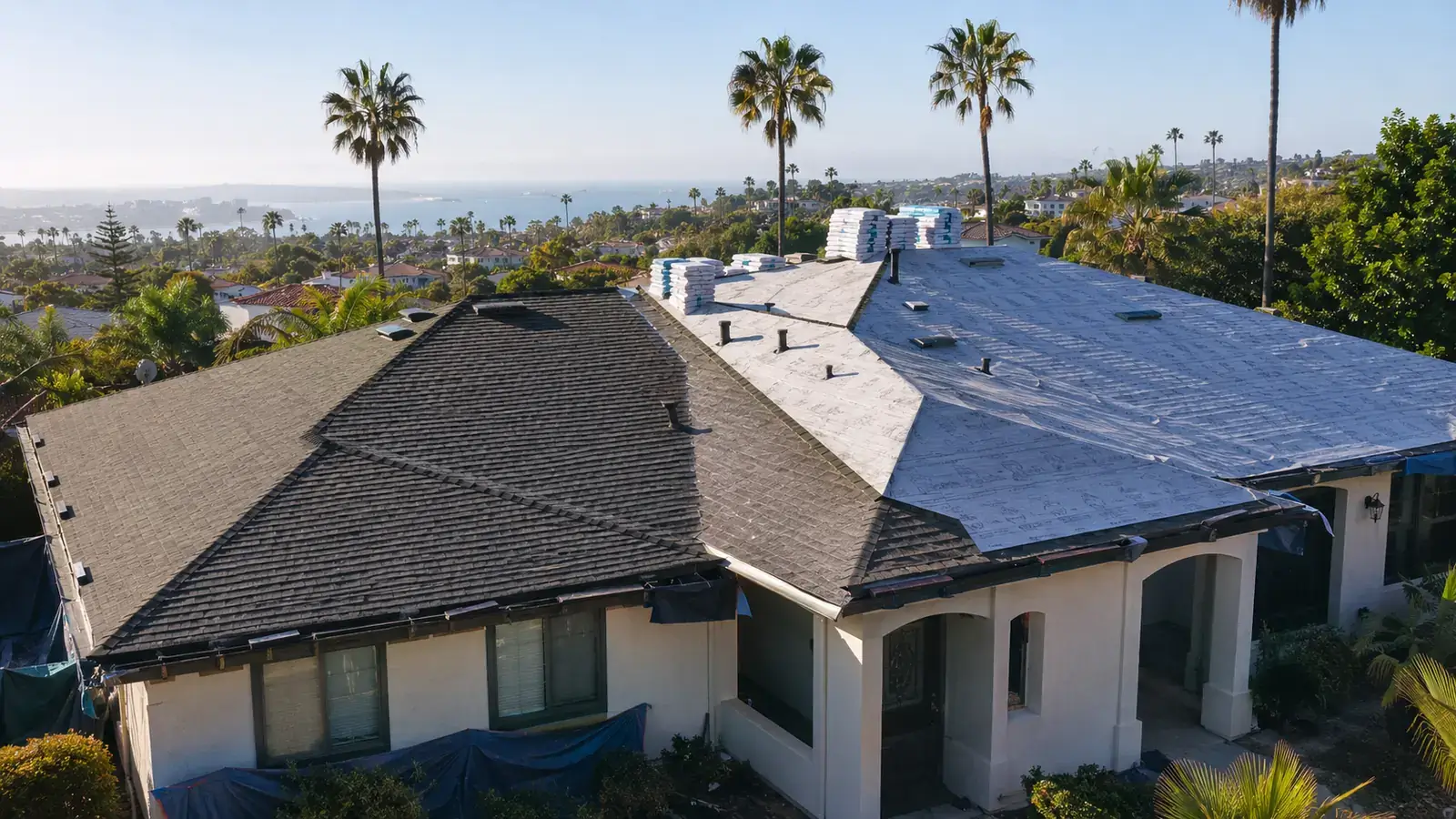
If you are planning a roof replacement in San Diego, the permit question should be answered before materials are ordered or demolition begins. At San Diego County Roofing & Solar, we treat permitting as part of project planning because the correct answer depends on what is actually being changed. In the City of San Diego, a straightforward reroof that renews the roof covering without altering the roof structure or diaphragm is generally exempt from a building permit. A permit becomes necessary when the work crosses specific structural, historical, material-weight, or related-system thresholds.
Is a Permit Required for a Roof Replacement in San Diego?
For many standard residential reroofing projects, the answer is no. The City states that renewal of roof coverings can be permit-exempt when the existing roof structure, including the roof diaphragm, is not altered.
These rules apply to properties within the City of San Diego. Homes elsewhere in San Diego County may fall under another city or County jurisdiction, so the building department should be confirmed before work begins.
When Does a San Diego Roof Replacement Require a Permit?
The key local reference is the City’s Information Bulletin 123 on renewal of roof coverings. It identifies several conditions that make a reroof permit-required.
A permit is required when roof-covering renewal involves alteration or replacement of structural framing members, roof sheathing or decking, support elements, lateral-resisting elements, or the foundation system. Structural framing plans and calculations may be required to demonstrate adequate vertical and lateral load capacity.
A permit is also required when existing wood shakes, wood shingles, or asphalt shingles are removed and replaced with roofing weighing more than six pounds per square foot. Heavier material can place different loads on existing framing, so structural verification becomes part of the approval path.
Another trigger occurs when existing spaced “skip” sheathing is removed and replaced with new plywood or OSB decking. However, skip sheathing may remain with new plywood or OSB installed over it without a building permit when the City’s conditions are met and the combined weight of the new roofing and added sheathing does not exceed six pounds per square foot.
How Much Roof Sheathing Can Be Replaced Without a Permit?
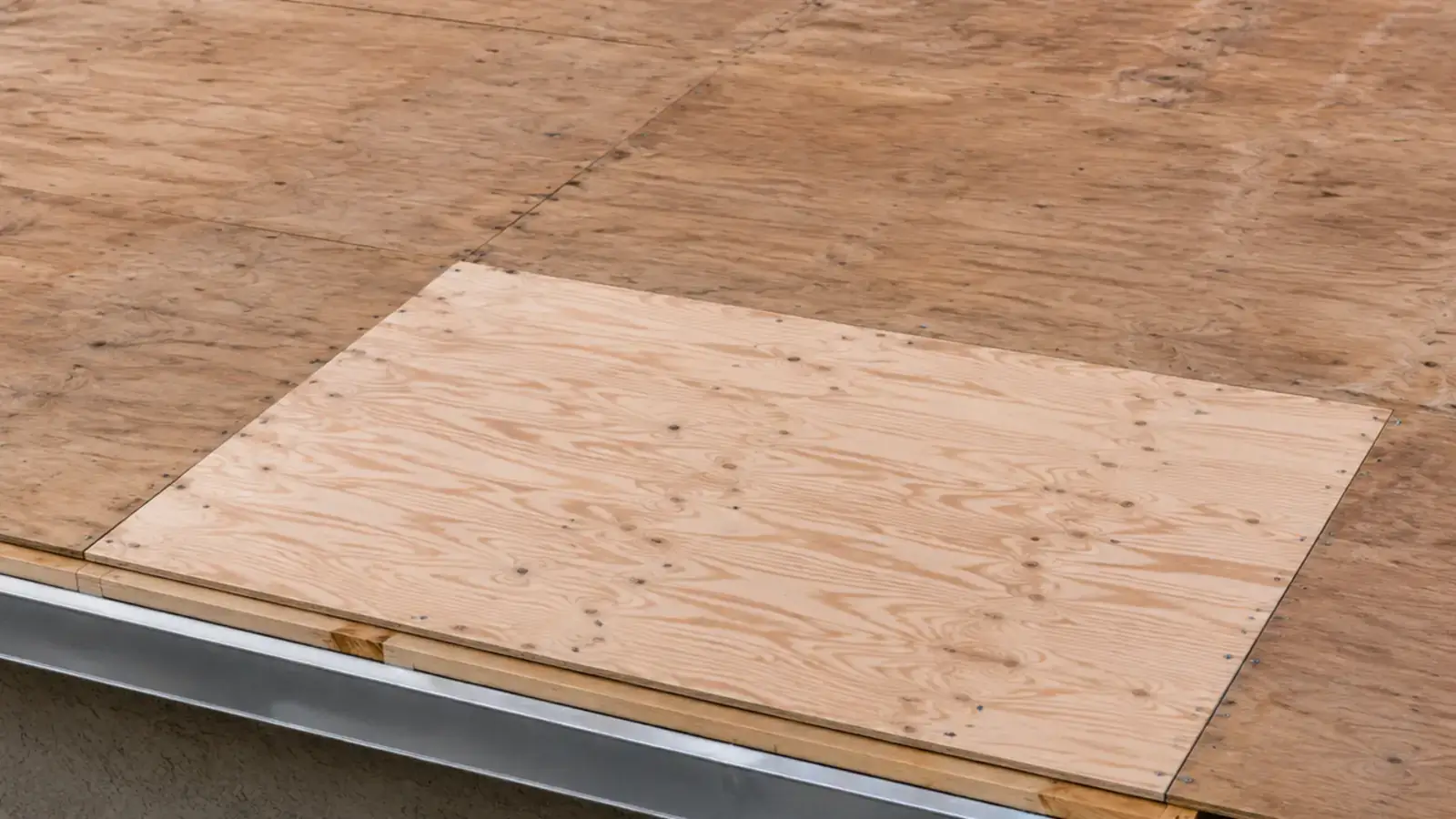
For single-family homes, duplexes, and townhouses, damaged roof sheathing or decking may be replaced in kind without a permit when the cumulative area does not exceed 25% of the entire roof surface area. The replacement sheathing nailing must comply with the governing code or match the existing nailing, whichever is more restrictive.
This threshold matters because hidden deterioration can change a project after tear-off. A reroof that appears permit-exempt at the estimate stage can become permit-required if extensive damaged decking or framing is uncovered.
Historic Homes and Historic Districts
A roof replacement on a designated historical resource or a property within an adopted historic district requires a permit for renewal of roof coverings. The City also states that buildings or structures 45 years old or older may require plans for historical review, although qualifying in-kind roof repair and replacement can be exempt under the cited municipal provisions.

Fire Hazard Zones and Roof Classification
Roofing projects in a Very High Fire Hazard Severity Zone can be subject to additional fire-protection requirements. The City’s bulletin notes that applicable provisions apply to buildings originally constructed on or after August 27, 2009. It also establishes Class A roof-covering requirements for replacement, alteration, and repair scenarios.
What If the Roof Has Solar Panels or Rooftop Equipment?
Roof replacement may affect systems attached to the roof. The City states that when existing roof-mounted photovoltaic panels are removed for roof-covering renewal, an electrical permit is required to reinstall the PV panels. If roof-mounted mechanical equipment or associated ducts or piping are removed, mechanical or plumbing permits can also be required for reinstallation.
Can You Install a New Roof Over the Existing Roof?
When an existing roof has two applications of asphalt shingles or built-up roof coverings, the City requires all existing layers to be removed down to the roof deck before a new covering is installed. New roof coverings also may not be applied over existing wood shakes or wood shingles.
San Diego Roof Permit Workflow
When a reroof requires a permit, plans and supporting documents must be submitted electronically through the City’s permitting system.
- Confirm jurisdiction and property status. Verify that the property is within the City of San Diego and check for historic or other special-review conditions.
- Define the reroof scope. Document the existing covering, number of layers, deck type, proposed material, rooftop equipment, and known structural damage.
- Check permit triggers. Review structural changes, deck replacement, material weight, historic status, solar, and rooftop equipment before demolition.
- Prepare and submit plans when required. Permit-required reroofs follow the City’s applicable building-permit submittal process.
- Coordinate inspections before concealment. Work that must be inspected should remain exposed until approval.
- Retain final records. Keep approved plans, permit documents, inspection results, and final approval with the property records.
What Roof Inspections Are Required?
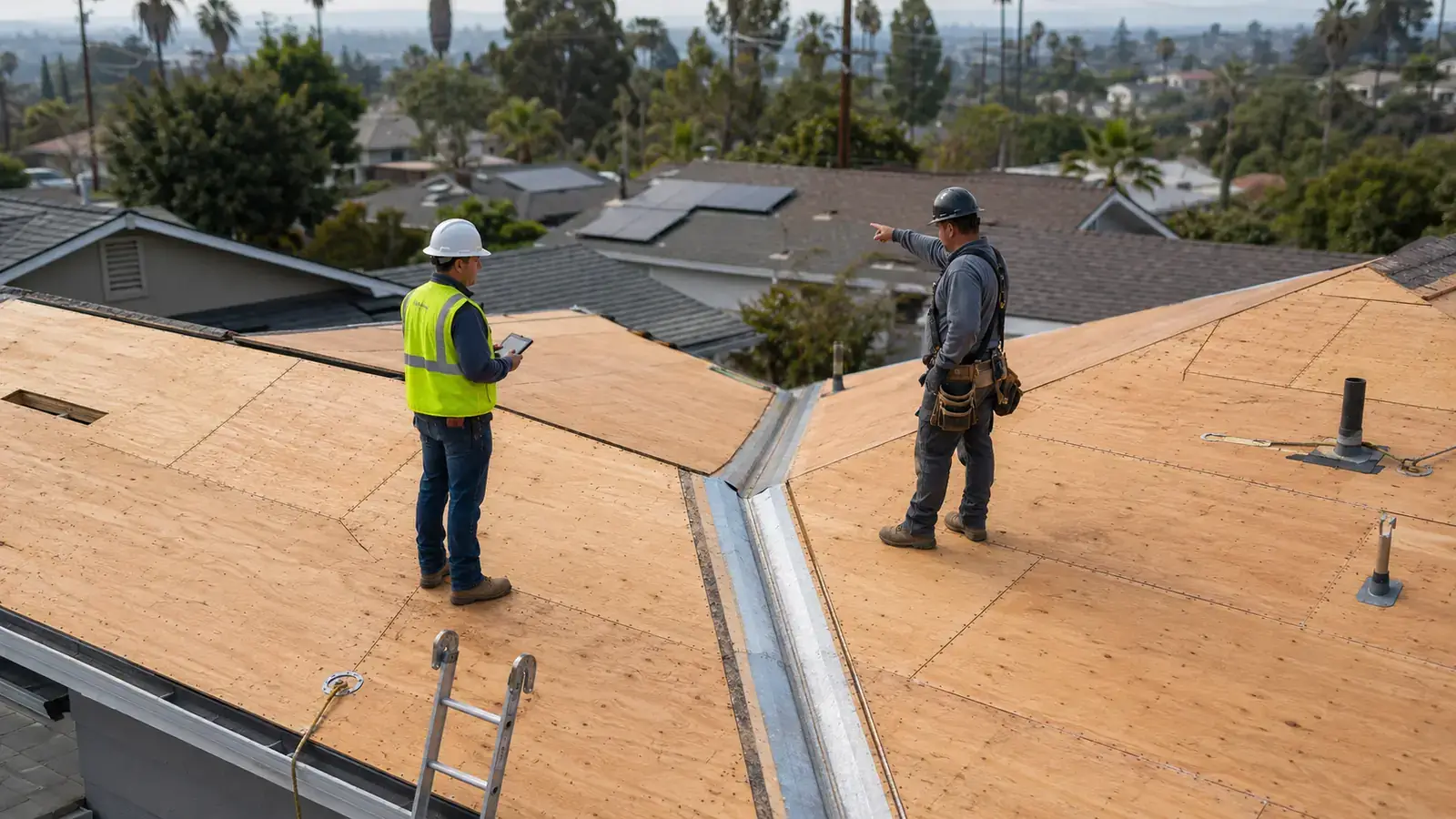
The exact sequence depends on the approved scope, but the City requires permitted construction to be inspected before required work is covered or concealed. Roof-system inspections occur after roof framing components and roof sheathing are installed.
Where multiple roof-system layers require inspection, approval is needed before the next layer is installed. Final inspection follows completion of dependent approvals. The City’s inspection guidance explains the current framework.
Who Is Responsible for the Roof Permit?
The roofing contract should identify who is responsible for permit preparation, fees, submission, inspection scheduling, corrections, and final approval. When a contractor is managing permit-required work, those responsibilities should be stated clearly in the project scope. A homeowner acting as an owner-builder takes on the administrative and compliance responsibilities associated with that role.
We recommend resolving this before the contract is signed. The responsible party should know which inspections are required, when they must be requested, what documentation is needed onsite, and how concealed structural damage will be handled if the scope changes.
Does a Permit Increase Roof Replacement Cost or Timeline?
A permit-required reroof may involve plan preparation, City fees, structural engineering, historical review, trade permits, and inspection scheduling. Those items can add cost and time compared with a permit-exempt roof-covering replacement.
The likely permit path should be identified during the initial roof evaluation so structural repairs, engineering, inspections, and trade permits can be budgeted accurately.
Plan the Roof Replacement Before Tear-Off
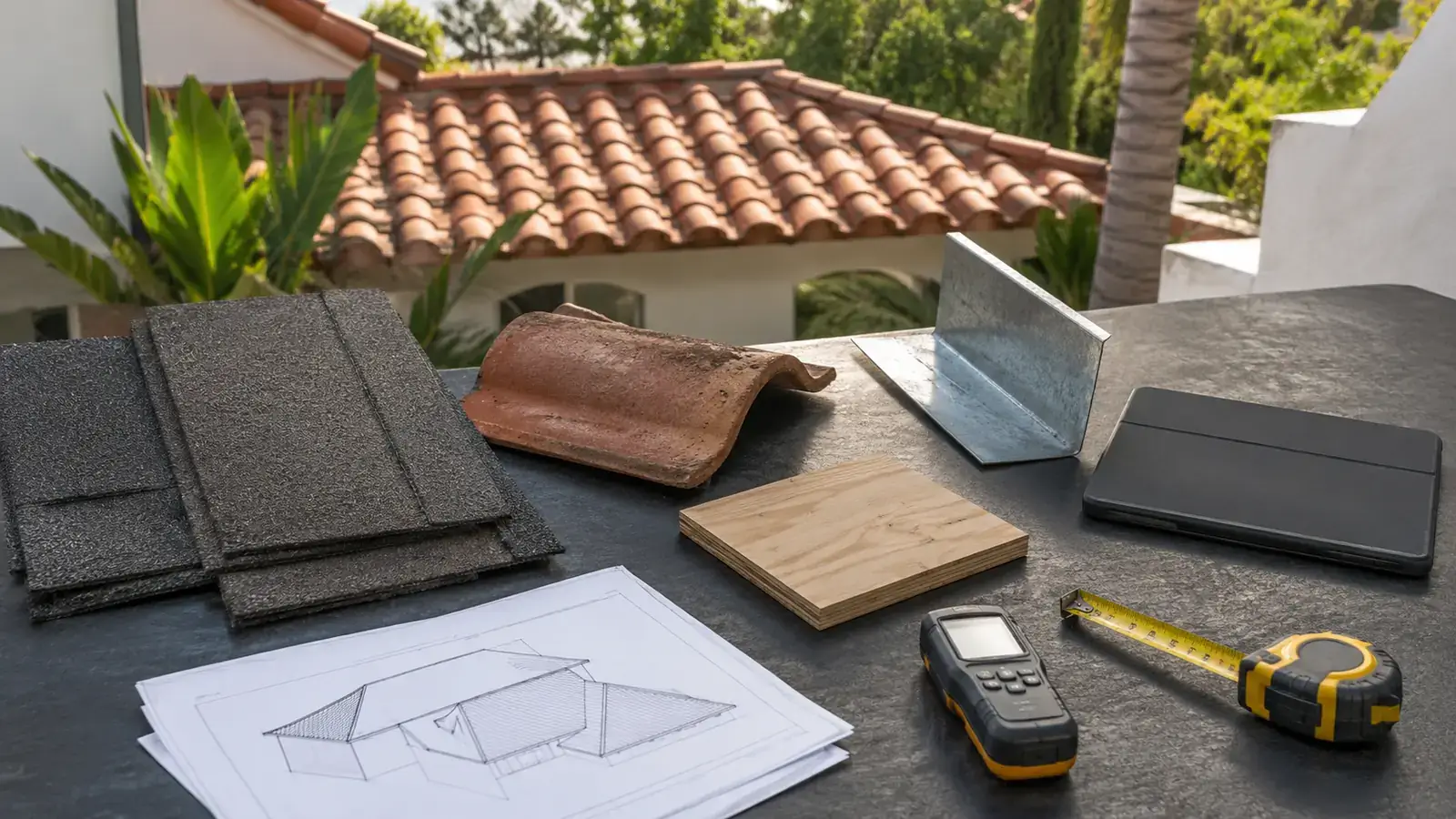
We examine the roof covering, visible deck conditions, existing layers, penetrations, rooftop equipment, proposed material weight, and signs of structural deterioration before defining the scope. For homeowners planning a complete project, our residential roofing services explain how we approach residential work, while a roofing consultation can help establish the appropriate scope before construction.
Conclusion
You do not automatically need a building permit for every roof replacement in the City of San Diego. A simple reroof that renews the roof covering without altering the roof structure or diaphragm can be exempt. A permit becomes necessary when the project involves qualifying structural or decking changes, heavier roofing conversions, designated historic properties or districts, and certain related systems such as removed-and-reinstalled solar equipment. The correct decision should be based on the actual scope, not on the assumption that every reroof is always permitted or always exempt. By confirming the roof assembly, deck condition, property status, and attached systems in advance, we can create a clearer project scope and reduce the risk of permitting delays.
FAQ
Do I need a permit to replace asphalt shingles in San Diego?
Usually not if the project is a simple roof-covering renewal and the roof structure or diaphragm is not altered. A permit may become necessary if tear-off reveals structural work, qualifying deck replacement, historic-resource requirements, or another permit-triggering condition.
Do I need a permit if damaged roof decking is found during replacement?
Not always. For single-family homes, duplexes, and townhouses, damaged roof sheathing or decking may be replaced in kind without a permit when the cumulative replacement area does not exceed 25% of the total roof surface, subject to the City’s nailing requirements. More extensive or structural work can require a permit.
Does removing solar panels for a roof replacement require a permit in San Diego?
The roof-covering work itself may be permit-exempt, but the City states that an electrical permit is required to reinstall roof-mounted photovoltaic panels removed for roof renewal. That electrical scope should be coordinated with the reroof schedule before work starts.
Let’s get started on your roofing project!