

Roof wind damage in San Diego is often less obvious than homeowners expect. A roof may look intact from the street while shingles have lifted, ridge caps have loosened, flashing has shifted, tiles have moved, or wind-driven rain has entered beneath the roof covering. At San Diego County Roofing & Solar, we recommend inspecting vulnerable roof areas promptly after Santa Ana conditions, winter storms, or any wind event that sends branches and debris across a property.
San Diego does not need hurricane-force conditions for roofing problems to develop. Repeated gusts, aging roofing materials, exposed ridgelines, canyon topography, coastal weather, and sudden rain can turn a minor weakness into a leak. The priority is to identify damage early, prevent additional water intrusion, and restore affected components before the next storm.
Why San Diego Roofs Are Vulnerable to Wind Damage
Santa Ana winds can accelerate through Southern California’s passes, foothills, and exposed terrain. Wind pressure is also uneven across a roof: corners, eaves, rakes, ridges, hips, parapets, and perimeter zones usually experience greater uplift than protected interior areas.
San Diego County has a documented history of damaging wind. National Weather Service San Diego historical weather records show that a May 2014 Santa Ana event produced gusts of about 40–45 mph in parts of the coast and valleys and 60–80 mph in foothill areas. Trees and power lines were downed, and some roof tiles were blown off. Repeated exposure can weaken the same roof details over time even when one event does not produce dramatic failure.
The risk increases when rain follows. A lifted shingle, shifted ridge cap, or separated flashing joint can create an entry path for wind-driven water that would remain dry during ordinary rainfall.
Common Signs of Roof Wind Damage
Lifted, Creased, or Missing Shingles
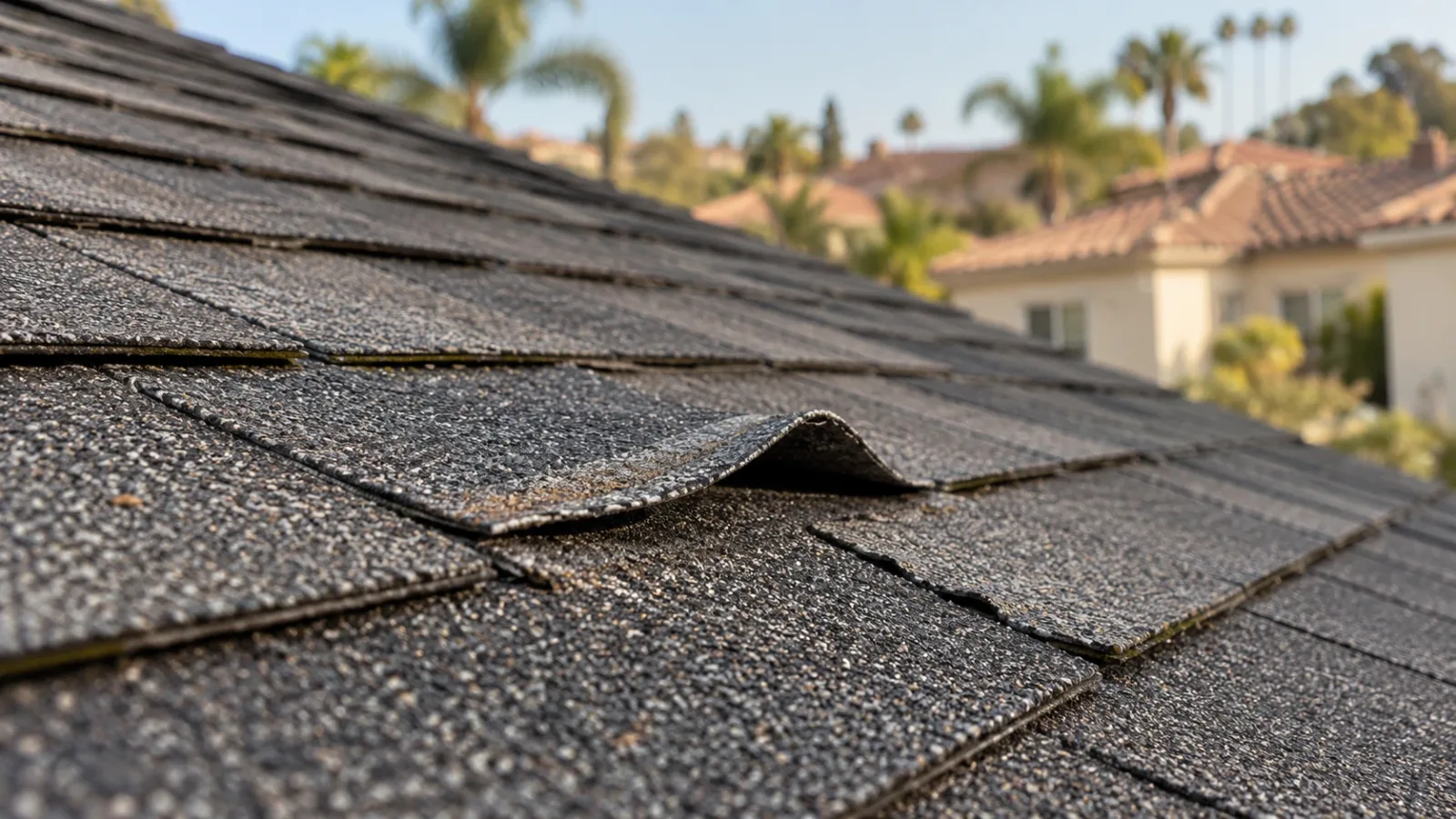
Asphalt shingles are designed to lie flat and seal to adjacent courses. Wind can break that seal, lift an exposed edge, or flex the shingle until a crease forms near the fastener line. A damaged shingle may settle back down after the wind stops, making the problem difficult to see from the ground.
Watch for irregular edges, torn corners, exposed nail heads, missing tabs, isolated raised areas, and creases. A shingle that has been sharply bent by wind should not be assumed sound simply because it lies flat again.
Loose Ridge and Hip Caps
Ridge and hip caps sit in highly exposed roof zones. Wind flowing over both sides of a ridge can create uplift that loosens cap shingles or tiles, breaks sealant bonds, exposes fasteners, or shifts ridge-vent components.
Damage here deserves prompt attention because ridges and hips protect long joints where roof planes meet. Openings at these locations can admit wind-driven rain across a larger area than a single missing field shingle.
Displaced or Broken Roof Tiles
Concrete and clay tiles are common in San Diego. Their weight helps them resist movement, but wind can still disturb tiles when attachment has weakened or when gusts reach beneath an exposed edge. Flying debris can also crack individual pieces.
Look for slipped tiles, broken corners, displaced ridge pieces, exposed underlayment, or debris lodged under tile edges. Even small movement may expose the water-shedding layers below.
Damaged Flashing and Roof Edges
Flashing protects chimneys, skylights, plumbing vents, roof-to-wall intersections, valleys, and perimeter details. Wind can bend metal, loosen fasteners, break sealant bonds, or pull flashing away from adjoining surfaces.
Fascia, soffits, drip edge, and gutters should also be checked. A gutter that has pulled away or a missing soffit panel may indicate wind stress at the roof perimeter, where future gusts can more easily get beneath roofing materials.
Wind-Driven Rain Can Cause Hidden Leaks
Strong wind changes the direction and pressure of rainfall. Water can be driven sideways against walls, vents, ridges, overhangs, and flashing details rather than simply falling downward.
FEMA explains in its guidance on sloped roof systems and wind-driven rain that strong winds can remove roof coverings and allow rain beneath shingles, while underlayment and properly detailed edges provide an important secondary barrier.
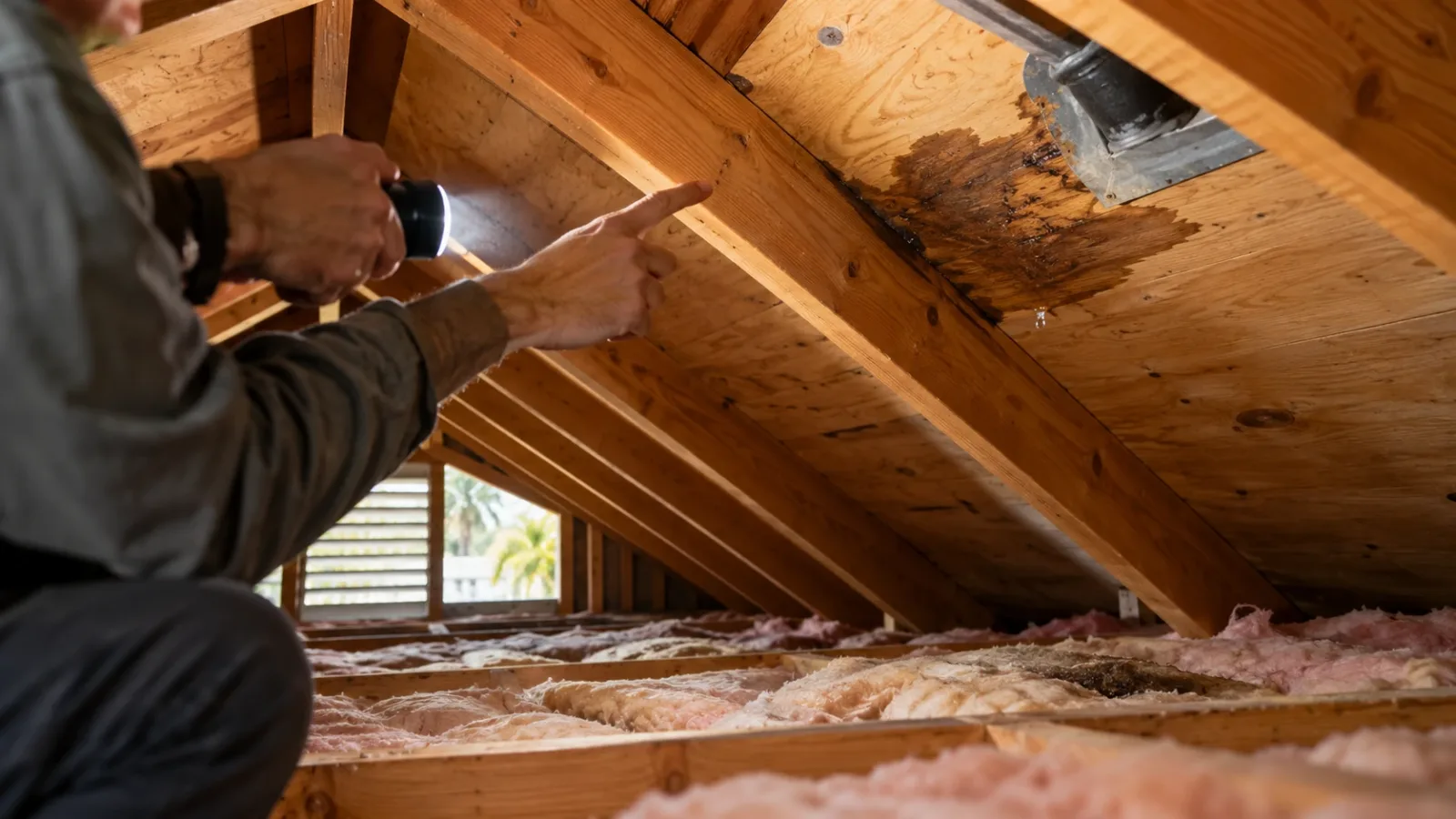
This is why a post-storm inspection should look beyond missing materials. Vulnerable areas include flashing laps, valleys, ridge vents, roof edges, penetrations, sealant joints, and any place where the roof covering has shifted. Water may travel along decking or framing before appearing indoors, so the ceiling stain is not always directly below the leak source.
What to Do Immediately After Strong Winds
Start with a ground-level inspection. Look for shingles, tiles, metal pieces, branches, fasteners, or other roofing debris around the property. A zoom camera or binoculars can help. Do not climb onto a wet, steep, fragile, or visibly damaged roof.
Next, check the attic and upper rooms for fresh stains, damp insulation, wet decking, drips around vents, or new musty odors. Flapping or tapping sounds during gusts can also indicate loose material.
If water is entering, contain it, protect valuables, and keep people away from wet electrical fixtures or saturated ceilings. Photograph visible damage before temporary repairs when safe, keep emergency-work receipts, and arrange a professional inspection before rain reaches insulation, decking, drywall, or finishes.
When Roof Wind Damage Is an Emergency
Request an emergency inspection when roofing material is actively blowing loose, a section of roof covering is missing, water is entering the building, a tree or large branch has struck the roof, flashing has detached around a major penetration, or roof decking is exposed.
Sagging ceilings, electrical involvement, structural movement, fallen power lines, or unstable tree limbs require immediate caution. Temporary tarping or dry-in work may be needed to limit additional rain entry until permanent repairs can be completed.

What a Professional Wind-Damage Inspection Should Include
A proper inspection should determine not only what is missing but what has loosened, shifted, fractured, or lost adhesion.
On asphalt shingle roofs, key areas include field shingles, starter courses, rakes, eaves, ridges, hips, valleys, flashing, vents, fasteners, and seal strips. On tile roofs, inspectors should look for cracked or displaced tiles, damaged ridge and hip pieces, exposed underlayment, attachment problems, and movement around valleys and penetrations.
Low-slope roofs require attention to membrane seams, perimeter termination, coping, flashing, drains, scuppers, and areas showing uplift, punctures, or separation. When accessible, the attic or interior should also be checked for moisture patterns that help trace the actual entry point.

Repairing Wind Damage Before the Next Storm
Repairs should restore the roofing system, not simply cover the visible symptom. Replacing one missing shingle may not be enough if adjacent shingles have broken seals or creases. Resetting a tile may not solve the problem if the underlayment beneath it is torn. Applying sealant over loose flashing is not a substitute for restoring proper attachment and overlap.
If the same ridge, eave, roof-to-wall transition, or exposed slope has failed more than once, the repair should address the underlying fastening or detailing problem rather than repeat a temporary patch. A damaged roof may stay dry until the next rainfall, so timely repair can prevent a hidden opening from becoming an active leak.
Reducing Future Wind Damage in San Diego
Preventive maintenance is especially useful before Santa Ana season and wetter winter weather. Keep branches trimmed away from the roof, remove loose debris, maintain gutters and drains, and address aging sealants, loose flashing, or displaced roofing materials before strong winds return.
Older roofs deserve closer attention because UV exposure and aging can reduce material flexibility and weaken adhesives, sealants, and attachment points. Homes on canyon rims, hillsides, and open lots may also experience stronger localized gusts. Correcting a loose edge, weak ridge cap, or failing flashing detail before the next event reduces the chance of progressive damage.
CONCLUSION
Roof wind damage in San Diego often begins with small failures at exposed details: lifted shingles, loose ridge caps, displaced tiles, damaged flashing, open roof edges, or debris impacts. Santa Ana winds and winter storms can combine those weaknesses with wind-driven rain, creating leaks that are difficult to trace and costly to ignore. We recommend a safe ground-level check after significant wind, clear documentation of visible damage, and a professional inspection when materials have shifted, water has entered, or debris has struck the roof. Early repairs can protect the underlayment, decking, insulation, and interior before the next storm turns a localized defect into a larger roofing problem.
FAQ
How can I tell if wind damaged my roof even if no shingles are missing?
Look for lifted or uneven shingle edges, creases, loose ridge caps, shifted tiles, exposed fasteners, bent flashing, debris around the home, or new water stains after rain. Some damaged materials settle back into place after the storm, so a roof can appear normal from the street while still having broken seals or loosened components.
Should I get a roof inspection after Santa Ana winds in San Diego?
An inspection is advisable after unusually strong winds, particularly when the roof is older, the property is highly exposed, debris struck the building, or you notice loose materials or interior moisture. A post-wind inspection can identify defects before the next period of wind-driven rain.
Can wind-driven rain leak through a roof that looks intact?
Yes. Wind can force rain beneath lifted shingles, around flashing, through damaged ridge or vent details, and into openings that are difficult to see from the ground. Water may then travel along underlayment, decking, or framing before it becomes visible on a ceiling or wall.