
Tile roofing is one of Southern California’s most durable roofing systems, but durable does not mean maintenance-free. At San Diego County Roofing & Solar in San Diego, CA, we often see tile roofs that look sound from the street while hidden underlayment, flashing, valleys, or fasteners are already deteriorating. Effective tile roof maintenance protects the complete water-shedding system before small defects lead to leaks, damaged decking, wet insulation, or interior repairs.
San Diego roofs face prolonged sun exposure, coastal air, wind-driven debris, seasonal rain, and frequent rooftop work around solar equipment, vents, skylights, and HVAC components. Maintenance should account for both the visible clay or concrete tiles and the concealed components beneath them.
Why Tile Roof Maintenance Matters in San Diego
Clay and concrete roof tiles are exceptionally durable. The Tile Roofing Industry Alliance notes that these materials resist rain, rot, insects, and severe weather and generally require little surface maintenance. Yet tile is only one part of the roof.
A tile roof also depends on underlayment, flashing, valley metal, fasteners or battens, ridge and hip components, penetrations, and a sound roof deck. Tiles shed most rainwater and shield the layers below from direct UV exposure, but a roof can still leak when most tiles look excellent.
Roofs that are approximately 20 to 30 years old deserve closer evaluation of the complete assembly. Age alone does not determine failure, but underlayment condition, previous repairs, roof orientation, ventilation, foot traffic, and exposure can all affect performance.
Tile Roof Underlayment Is the Hidden Layer to Watch
Underlayment sits between the structural roof deck and the tile. It provides a secondary water-management layer when moisture gets beneath the roof covering.
Because it is concealed, deterioration can remain unnoticed until water stains appear indoors. Older felt products may become brittle, split, wrinkle, or weaken around fasteners and roof transitions. Modern synthetic and self-adhered products have different performance characteristics, but proper laps, fastening, flashing integration, drainage, slope, and roof-deck condition still determine performance.
If an older tile roof has never had its underlayment evaluated, homeowners should not assume the roof is healthy simply because the tiles look good. The tile may still have substantial remaining service life while the concealed waterproofing layer is much closer to needing renewal.
This difference between tile life and underlayment life is one of the most important issues to understand when maintaining an older San Diego tile roof.

Cracked, Slipped, and Broken Tiles Need Prompt Repair
A few damaged tiles do not automatically mean the roof needs replacement, but they should not be ignored. Cracks expose underlayment to additional sunlight and moisture. Slipped tiles disrupt the intended overlap and drainage pattern, while missing tiles expose a much larger area below.
Common causes include foot traffic, impact, failed fasteners, previous repairs, and work by other trades. Solar, satellite, HVAC, and pest-control technicians may need to cross a roof, and incorrect walking technique can crack clay or concrete tile.
Repairs should restore the original overlap and use a compatible tile profile. Excessive sealant or improvised patches may hide a symptom without correcting the actual water-entry path.
When replacement tiles are difficult to match, usable tiles from less-visible roof areas may sometimes help preserve a consistent appearance, provided the repair is properly planned.
Valleys, Flashing, and Penetrations Are Common Leak Zones
Many tile-roof leaks begin at transitions rather than in the middle of an undisturbed roof plane. Valleys carry concentrated runoff, while chimneys, skylights, plumbing vents, walls, and other penetrations interrupt the roof covering and rely on correctly integrated flashing.
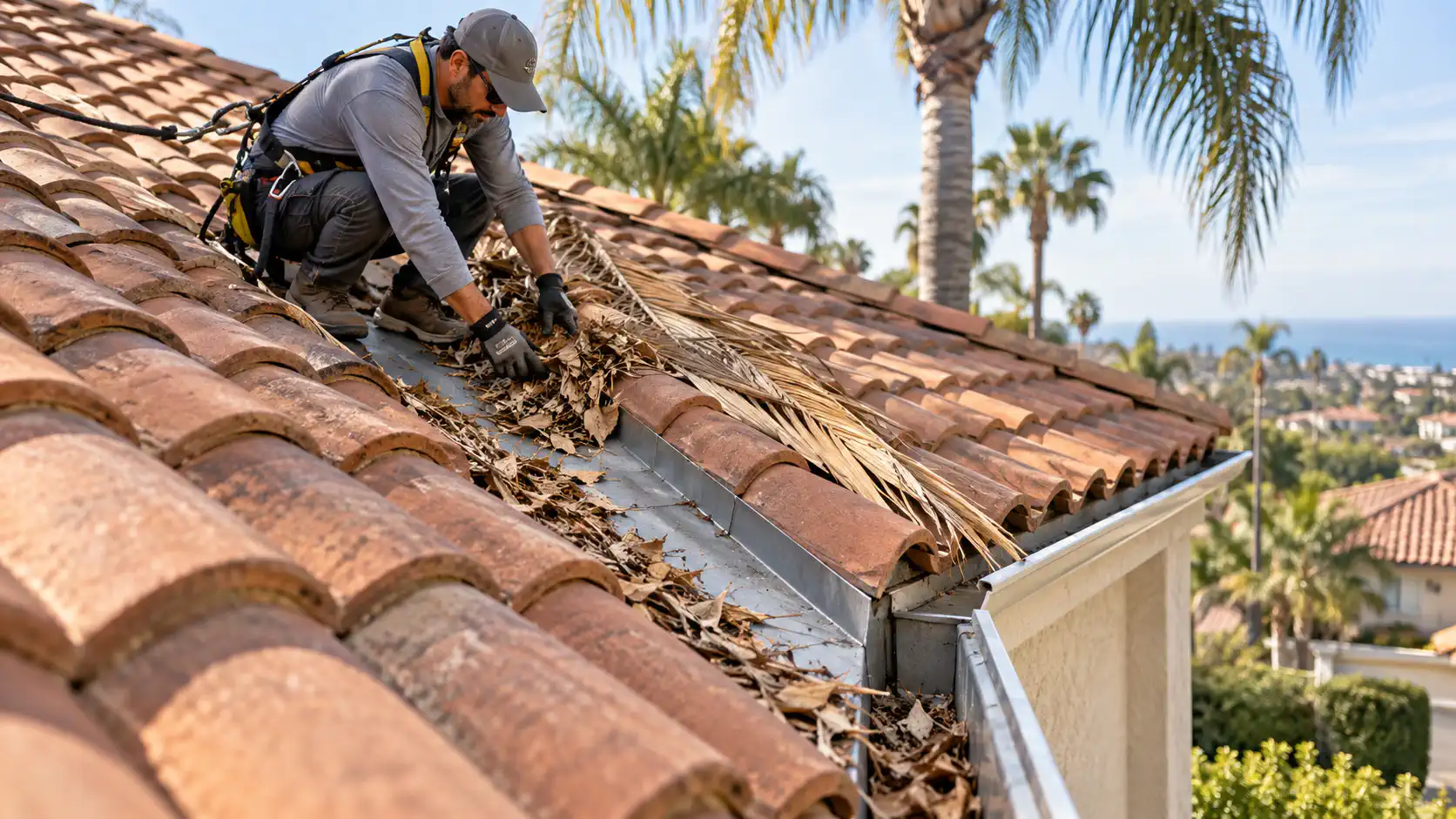
Maintenance should check for corroded or displaced metal, blocked valleys, failed transition details, debris, loose components, and evidence of earlier patching. Palm debris, leaves, dirt, and broken tile fragments can slow drainage and redirect water beneath adjacent tiles.
Roof edges and eaves should also be checked for staining, deteriorated fascia, or wood damage that may indicate a drainage problem higher on the slope.
These areas deserve particular attention before San Diego’s rainy season because concentrated runoff can quickly expose weaknesses that remained unnoticed during months of dry weather.
Cleaning Is Not the Same as Tile Roof Maintenance
A clean roof is not necessarily a healthy roof. Aggressive pressure washing can damage some tile finishes, force water into areas that normally stay dry, and create unnecessary foot traffic.
The Tile Roofing Industry Alliance describes clay tile as essentially maintenance-free at the surface and concrete tile as very low maintenance, while noting that professional low-intensity cleaning may be appropriate when desired.
The priority should remain the roof’s condition: broken tiles, drainage, flashing, underlayment, penetrations, and safe access matter more than cosmetic appearance.
A Practical Tile Roof Maintenance Schedule
Homeowners can perform periodic ground-level visual checks and inspect the roof again after significant wind or rain. Look for slipped or missing tiles, broken ridge pieces, exposed areas beneath tile, debris-filled valleys, displaced flashing, or tile fragments on the ground.
Professional inspections become increasingly valuable as a roof ages, after a leak, or following substantial rooftop work. Older systems and roofs with a history of repairs deserve closer attention because recurring small defects may indicate broader underlayment deterioration.
Gutters, valleys, and drainage paths should also be cleared before the rainy season. Water that cannot move efficiently off the roof increases exposure at eaves, walls, valleys, and other transitions.
Homeowners should avoid unnecessary walking on tile. Clay and concrete tiles are strong in normal installed conditions but can crack when concentrated weight is applied incorrectly.
What a Professional Tile Roof Inspection Should Include
A useful tile roof inspection should go far beyond counting broken tiles. We evaluate the roof as a connected system and document defects that may affect water movement or structural condition.
Important areas include:
- Tile condition and alignment
- Cracked, slipped, or missing tiles
- Ridge and hip components
- Flashing at walls and penetrations
- Roof valleys and drainage channels
- Visible underlayment where safely accessible
- Skylight, chimney, and vent details
- Previous roof repairs
- Roof-deck symptoms
- Ventilation conditions
- Eaves and fascia
- Evidence of interior moisture
Attic observations can also reveal staining, moisture patterns, damaged sheathing, or daylight that may not be visible from the exterior.
The inspection should distinguish routine maintenance from urgent repairs and system-wide aging. That helps homeowners avoid both unnecessary replacement and repeated patching on a roof whose concealed components are broadly deteriorated.
When Localized Tile Roof Repair Is Enough
Localized repair is usually appropriate when damage is limited and the surrounding roof assembly remains serviceable.
Examples include a small number of cracked tiles, a specific flashing defect, localized damage around a penetration, or a leak with a clearly identifiable source.
Diagnosis matters because water can enter at one location and travel along underlayment, decking, or framing before becoming visible somewhere else indoors. Replacing the tile directly above a ceiling stain may therefore fail to solve the actual problem.
A proper tile roof repair restores the drainage sequence by correcting the damaged tile, flashing, underlayment, or overlap responsible for the leak.
Repeated repairs in several unrelated areas, however, can indicate that the problem is no longer localized.

When a Tile Roof Needs a Lift and Relay
A tile roof lift and relay is often the strongest option when the existing tile remains reusable but the underlayment or related waterproofing components have aged beyond dependable service.
The process generally involves carefully removing and staging the existing tiles, exposing the roof deck, replacing damaged wood where necessary, installing new underlayment, correcting flashing and valley details, and reinstalling the original tile. Compatible replacements are added where tiles were already damaged or cannot be reused.
This approach can preserve the appearance of homes with older tile profiles or colors that are difficult to match. It also directs the project budget toward components that actually need renewal instead of automatically discarding serviceable roof tile.
For many older San Diego homes, this is particularly valuable because clay or concrete tiles may remain structurally useful even after the waterproofing materials underneath have deteriorated.
Lift and Relay vs. Full Tile Roof Replacement
The decision should be based on roof condition rather than age alone.
A lift and relay generally makes sense when most tiles remain structurally sound and the main deterioration exists beneath them. Full tile roof replacement becomes more appropriate when tile damage is widespread, compatible replacement tile is unavailable, significant structural decking damage exists, or the current installation cannot be economically restored.
Before choosing either option, the contractor should determine whether the dominant failure is occurring in the tile surface, underlayment, flashing, drainage system, or roof deck.
For homeowners with an aging tile roof, San Diego County Roofing & Solar can inspect the complete system and determine whether routine maintenance, targeted repair, or a tile roof lift and relay is the most appropriate next step.

Tile Roof Warning Signs That Should Not Wait
Schedule a professional inspection when you notice:
- Ceiling stains after rain
- Active water dripping
- Musty attic odors
- Slipped or missing tiles
- Repeated cracked tiles
- Loose ridge or hip tiles
- Corroded valley metal
- Damaged flashing
- Water stains around skylights or vents
- A leak that returns after previous repairs
A roof should also be inspected after significant rooftop work. Even when no immediate leak develops, cracked or displaced tiles can expose the underlayment to additional UV radiation and moisture.
Early diagnosis can keep a repair focused before water reaches the roof deck, insulation, drywall, framing, or interior finishes.
Conclusion
Tile roof maintenance in San Diego should focus on the complete roofing assembly, not only the visible clay or concrete surface. Durable tile can remain serviceable long after underlayment, flashing, valleys, and other concealed components begin to age. Regular visual checks, timely professional inspections, prompt replacement of cracked or slipped tiles, clear drainage paths, and careful attention to penetrations can prevent minor defects from becoming major water-damage problems. When the tiles remain in good condition but the underlayment has broadly deteriorated, a lift and relay can renew the roof’s critical waterproofing components while preserving reusable tile and the home’s established appearance.
FAQ
How often should a tile roof be inspected in San Diego?
Inspection frequency should reflect the roof’s age, condition, exposure, repair history, and rooftop traffic. Homeowners should visually check the roof after significant wind or rain, while older tile roofs and roofs showing signs of deterioration should receive more frequent professional evaluation.
How do I know if my tile roof underlayment is failing?
Common warning signs include recurring leaks, attic staining, moisture around roof penetrations, deteriorated material visible beneath displaced tiles, or a significantly aged roof that has never had underlayment work. Because the underlayment is concealed, a professional inspection is often necessary to determine whether deterioration is localized or widespread.
Is a lift and relay better than replacing a tile roof?
It can be when most existing tiles remain structurally sound. A lift and relay allows serviceable tile to be reused while the underlayment, flashing, damaged decking, valleys, and related components are renewed. Full replacement is generally more appropriate when tile damage or overall roof-system deterioration is extensive.