
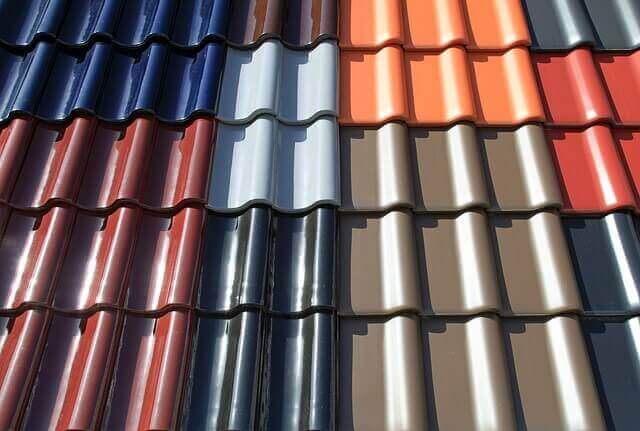
Choosing the right roof color is more than a cosmetic decision. At San Diego County Roofing & Solar, we consider how a roof color will look with the home’s architecture, how it will behave under strong Southern California sun, how it coordinates with permanent exterior materials, and whether HOA rules limit the available options. Because a roof can remain in place for decades, the best color is one that still looks intentional after paint trends change, landscaping matures, and the property eventually changes hands.
Why Roof Color Matters More in San Diego
San Diego homes face long periods of sunshine, warm inland temperatures, coastal glare, and strong ultraviolet exposure. Roof color can therefore affect both appearance and surface temperature.
Dark roofing generally absorbs more solar energy than lighter or more reflective roofing. According to the U.S. Department of Energy, cool roofs can stay up to 60°F cooler than traditional black roofs during summer conditions. A cooler roof surface can reduce heat transfer into the building and may reduce cooling demand, although actual performance depends on insulation, ventilation, roof assembly, product reflectance, orientation, and local climate.
This does not mean every San Diego home should have a white roof. Modern roofing products can deliver reflective performance in medium grays, earth tones, and blended colors. Evaluate rated solar properties rather than assuming appearance alone determines heat performance.
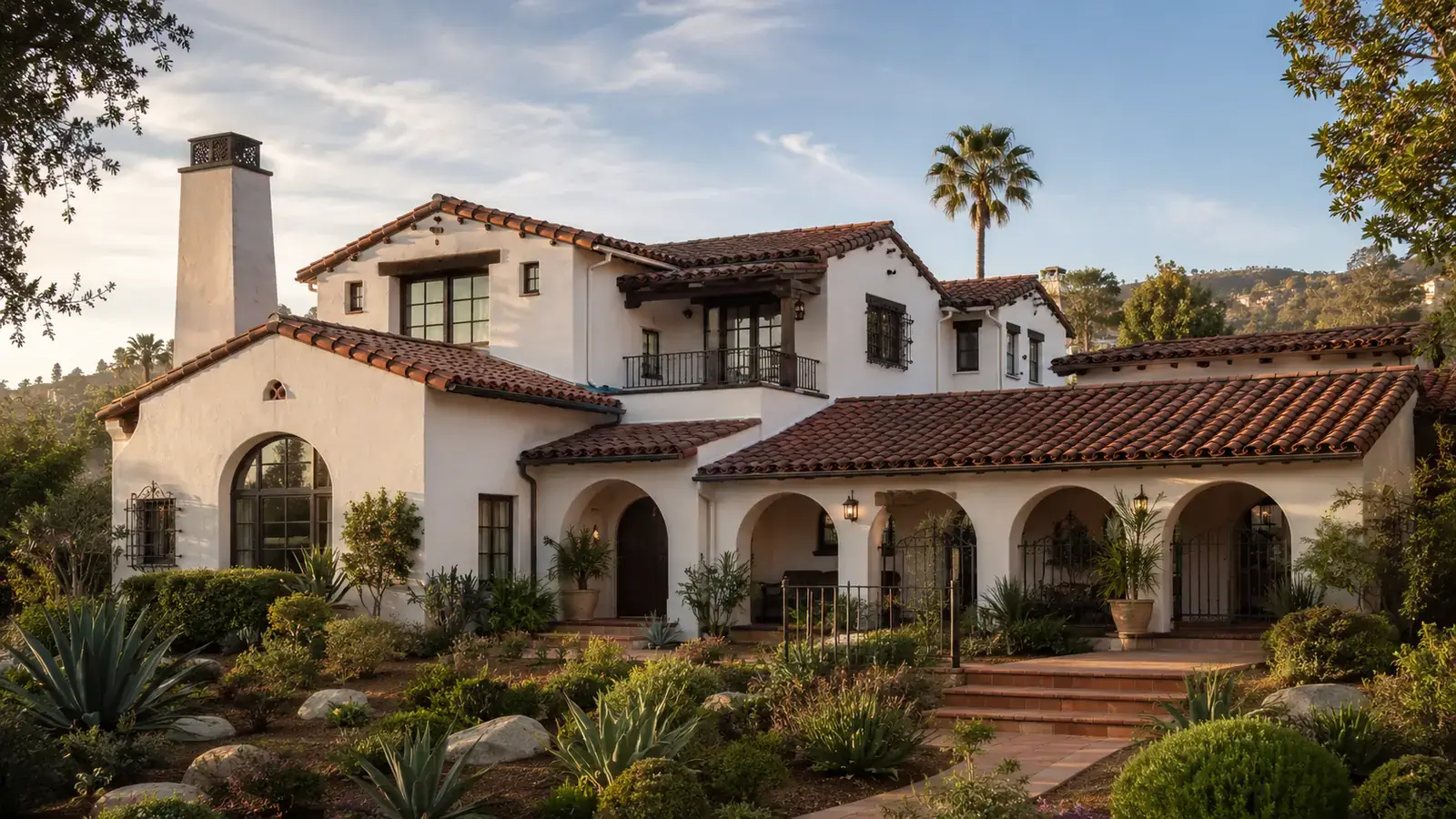
Start With the Home’s Architectural Style
A roof should look like part of the architecture, not a separate design element. San Diego includes Spanish Revival, Mission, Mediterranean, Craftsman, Ranch, Mid-Century, contemporary, coastal, and traditional suburban homes.
Spanish and Mediterranean homes commonly work with terracotta, clay red, warm brown, sand, and earth-tone tile blends. Craftsman homes often suit charcoal, brown, muted green, or weathered shades, while contemporary and coastal homes can support cleaner gray, slate, taupe, or restrained neutral palettes. The goal is to preserve consistency between roof shape, wall finish, trim, masonry, and the architectural period of the house.
Match the Roof to Permanent Exterior Materials First
Paint can be changed relatively easily. Stone veneer, brick, masonry, decorative tile, and hardscape are more permanent, so roof color should be coordinated with those elements first.
If a home has warm beige stone with brown undertones, a blue-gray roof can create an unintended clash. If the exterior contains cool gray stone, a strongly orange roof may feel disconnected unless the architecture clearly supports it.
Look for the dominant undertone in permanent materials. Warm exteriors usually coordinate with brown, tan, terracotta, bronze, and warm gray. Cool exteriors often work with charcoal, slate, blue-gray, and neutral gray. Homes with mixed undertones can benefit from blended roofing colors that repeat more than one exterior tone.
Light Roof Colors vs. Dark Roof Colors
Dark roofing creates stronger contrast, defines rooflines clearly, and can make a large roof feel visually heavier. Light roofing reduces contrast and can soften a dominant roof plane, especially on pale stucco homes.
Black or dark charcoal can look crisp on white, cream, or light-gray houses, but an extremely dark roof may dominate a one-story home with a large visible roof area. Mid-tone colors often provide a more forgiving balance. Very light roofing can look clean and climate-appropriate, but it should still be judged for glare, wall color, and visible dirt.
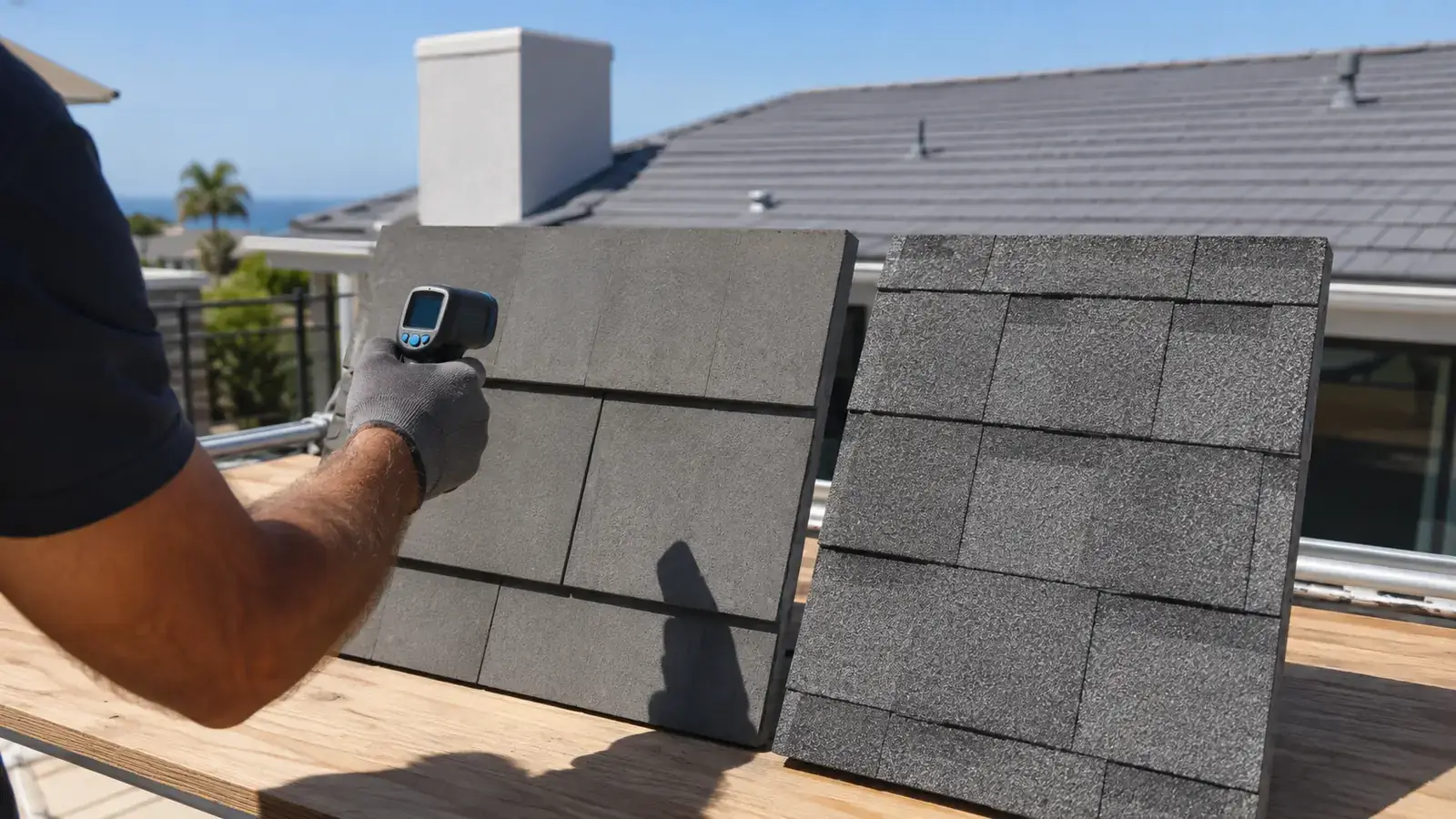
Consider Cool Roof Performance, Not Just Color Names
A product marketed as “charcoal,” “weathered wood,” or “sand” tells us how it looks, not exactly how it performs in sunlight. Similar-looking roofing products can have different solar properties because of granule technology, pigments, coatings, and surface composition.
For a San Diego roof replacement, homeowners concerned about heat should compare product ratings where available. Solar reflectance describes how much solar energy a surface reflects, while thermal emittance describes how effectively absorbed heat is released. California energy requirements can also vary by project type, roof slope, product, and climate zone, so the specific roof assembly should be verified rather than selected by color alone.
A medium-tone reflective product may therefore be a better fit than choosing a pale roof solely because it appears “cool.”
Choose Colors Differently for Tile and Asphalt Shingles
Tile Roof Colors
Tile creates deep shadow lines and strong texture, so color variation becomes part of the design. Concrete and clay tile may be available in solid colors, flashed effects, or blends combining reds, browns, golds, grays, and other tones.
On a Spanish-style roof, a blended tile can add dimension and prevent a large surface from appearing flat. For a modern home using flat tile, a more uniform gray or charcoal can create a cleaner appearance. Because the tile profile itself changes how light hits the roof, judge samples from a realistic viewing distance.
Asphalt Shingle Colors
Architectural asphalt shingles typically combine multiple granule colors to create depth. A sample labeled “brown” may read as gray-brown, bronze, or nearly charcoal across an entire roof.
Focus on the dominant field color rather than the smallest accent granules. The dominant tone is what most people will perceive from the street.

Check HOA Rules Before Finalizing the Color
Many San Diego County communities have homeowners associations with architectural standards. These rules may address exterior modifications, approved material palettes, visible roof colors, and review procedures. A California Senate Judiciary Committee analysis notes that common-interest development architectural guidelines can regulate exterior changes in very specific detail, including permitted colors. Review applicable California HOA architectural guidelines and your association documents before materials are ordered.
If approval is required, submit the exact manufacturer, product line, material, and color rather than a generic description such as “gray tile.” Similar color names can produce noticeably different installed finishes.
Evaluate Roof Color in Real San Diego Light
Never choose a roof color from a small digital swatch alone. Screens shift color, photography changes with lighting, and a sample viewed indoors may look very different outside.
Place physical samples beside the home’s stucco, siding, trim, stone, or brick. Check them in direct midday sun, morning light, late-afternoon light, and shade. Bright San Diego sun can make pale colors appear brighter and expose undertones that are difficult to see indoors.
Whenever possible, view a completed roof using the same product. A full roof contains thousands of shingles or tiles, so scale changes the perceived color.
Think About Curb Appeal and Resale
Roof color can either unify an exterior or make its components compete. For broad resale appeal, neutral and architecture-appropriate colors usually give future owners more flexibility when repainting walls, trim, doors, or shutters.
Neutral does not mean bland. Charcoal shingles, weathered brown blends, terracotta tile, and refined gray tile can add character while supporting multiple exterior palettes. A highly unusual roof color creates a stronger personal statement but can narrow future paint choices. Use contrast deliberately so the roofline feels intentional rather than disconnected from the walls and trim.
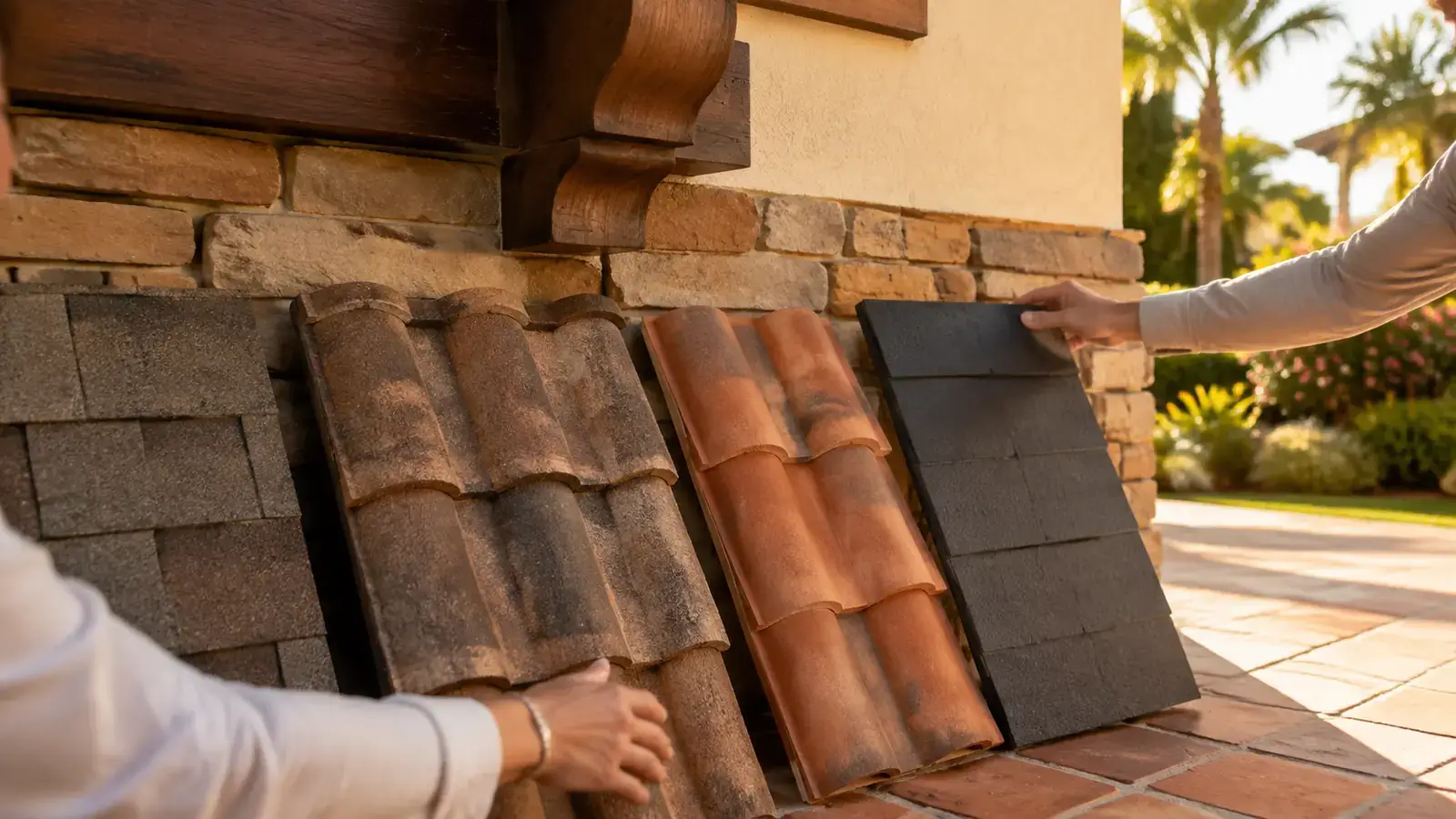
A Practical Roof Color Selection Process
We recommend making the decision in this order: confirm HOA restrictions; choose the roofing material and product line; evaluate reflectance or cool-roof needs; match permanent exterior materials; eliminate colors that conflict with the architectural style; compare physical samples outdoors; and view installed examples whenever possible.
This order prevents homeowners from becoming attached to a color that is unavailable, noncompliant, poorly matched to the roofing system, or visually different at full scale. Finalize the choice before materials are ordered because product lines vary in palette, profile, availability, and performance.
During a roof replacement consultation, San Diego County Roofing & Solar can help homeowners compare roofing samples with the property’s architecture and finishes while considering San Diego heat exposure and long-term appearance. The goal is a roof that performs correctly and looks designed for the home—not simply a color selected from a catalog.
Conclusion
The right roof color for a San Diego home balances architecture, climate, solar heat, roofing material, HOA requirements, curb appeal, and resale flexibility. Start with permanent exterior elements, compare actual product performance instead of relying on color names, and evaluate samples in outdoor light. A carefully selected roof color can make the entire exterior feel more cohesive while supporting practical, durable long-term roof performance.
FAQ
What is the best roof color for a house in San Diego?
There is no single best color for every property. Light and reflective roofing can help reduce solar heat absorption, while medium grays, earth tones, terracotta, and reflective darker-looking products may provide a strong combination of architecture and performance. The ideal choice depends on the home’s style, exterior materials, roof type, sun exposure, and HOA rules.
Do lighter roof colors keep a San Diego home cooler?
Generally, roofing with higher solar reflectance absorbs less solar energy and can maintain a lower surface temperature. However, visible color is only a rough indicator. Product-specific reflectance, thermal emittance, insulation, attic ventilation, roof assembly, and orientation all affect heat transfer. Compare rated roofing products rather than assuming every light-colored roof performs the same way.
Should the roof be lighter or darker than the house?
Either can work when the contrast is intentional. A darker roof often creates definition against white, cream, or light-gray walls, while a lighter or medium-tone roof can soften a large roof area and coordinate well with warm San Diego stucco. Compare roof samples with the home’s permanent materials and judge the combination from the street before making the final selection.
Let’s get started on your roofing project!