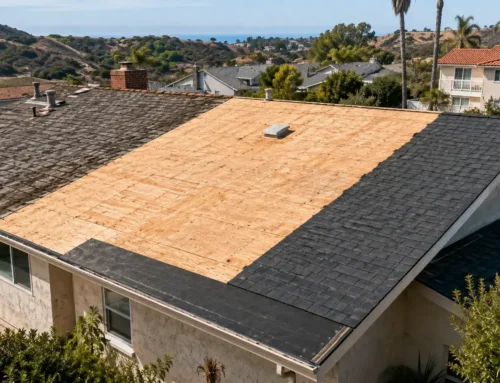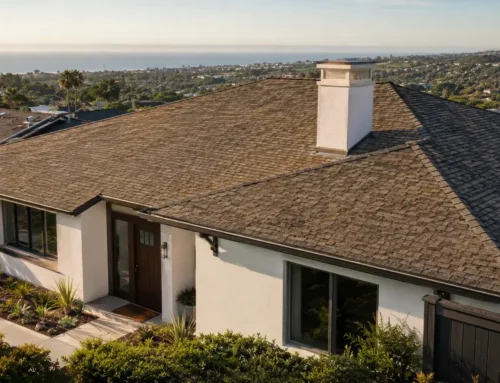

Roofing cost in San Diego can vary widely because every roof is different. A small repair may be simple, while a full roof replacement can involve tear-off, new underlayment, decking repairs, flashing, ventilation, permits, solar coordination, and premium materials.
For budgeting, many San Diego homeowners should expect a full roof replacement to fall somewhere between about $9,000 and $40,000 or more. Asphalt shingle roofs are usually on the lower end, while tile, metal, steep roofs, large homes, and complicated roof designs can cost significantly more. Some tile and premium roofing projects can exceed $50,000 depending on size, structure, and material choice.
Online averages can help you plan, but they should not replace a professional roof inspection. The only accurate roofing estimate is based on the actual roof surface, slope, access, material, condition of the existing system, and the amount of hidden damage found during inspection.
How Much Does a New Roof Cost in San Diego?
A new roof in San Diego is usually priced by roof size, not just the square footage of the home. Roofers measure the roof surface itself, including slope and overhangs. A single-story home with a simple roofline may cost much less than a two-story home with valleys, chimneys, skylights, solar panels, and difficult access.
Asphalt shingles are often the most budget-friendly option for residential roof replacement. They are popular because they offer a good balance of cost, appearance, and performance. Tile roofing costs more upfront, but it is common throughout San Diego County because it fits local architecture and performs well in the Southern California climate. Metal roofing and specialty low-slope systems can also cost more, but they may offer strong durability, energy performance, or design value.
The final number depends less on one average price and more on what your roof actually needs.
What Affects Roofing Cost in San Diego?
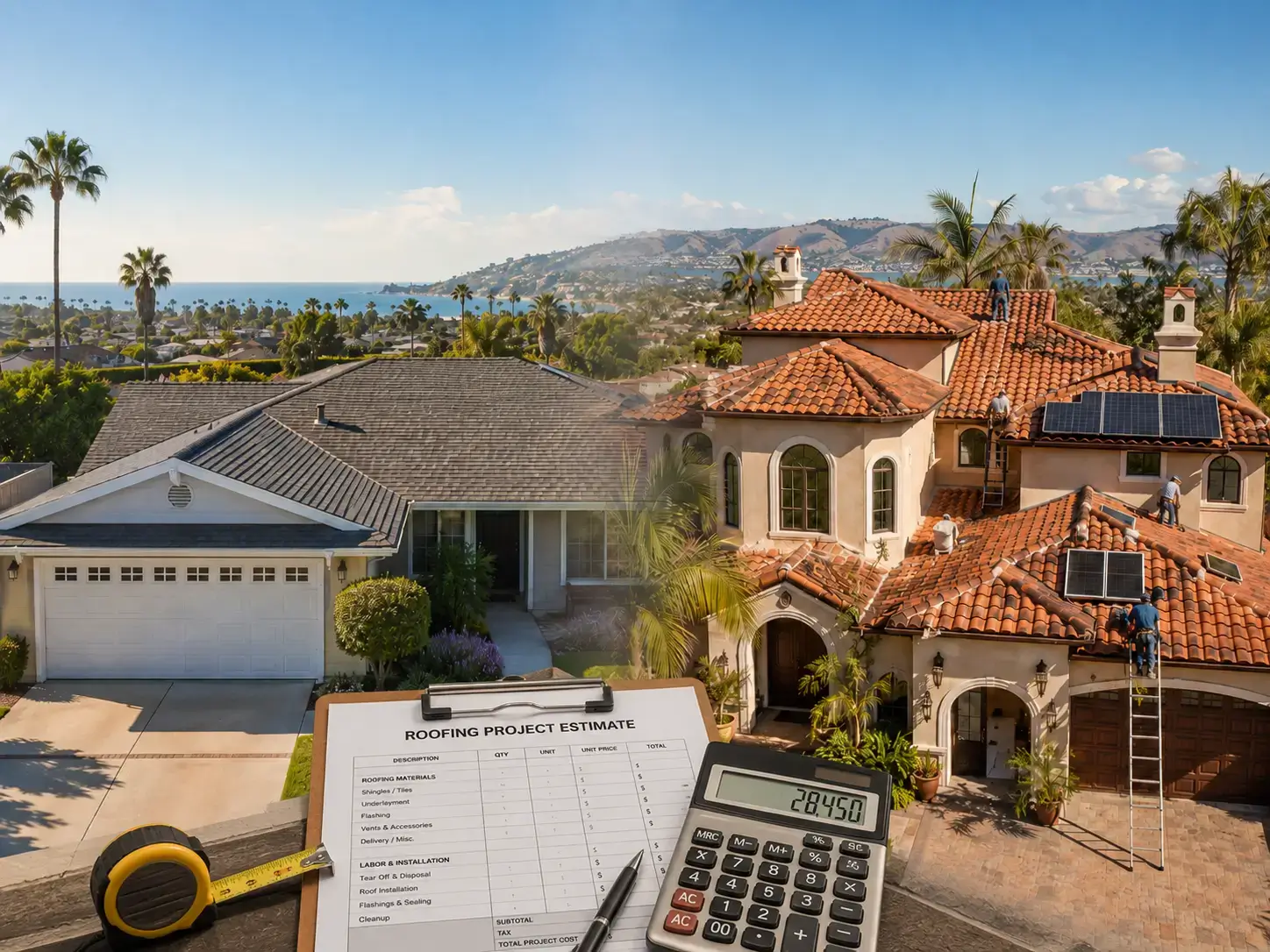
Roof size is the biggest cost factor, but it is not the only one. Roof slope, number of stories, access, roof shape, material weight, tear-off requirements, decking condition, and labor all influence the estimate. A roof with several valleys, hips, dormers, skylights, vents, chimneys, or wall transitions requires more detailed work than a simple roof with open access.
The existing roof condition also matters. If the old roof has soft plywood, dry rot, water damage, poor ventilation, or failing flashing, those issues need to be corrected before the new roofing system is installed. These repairs can add cost, but ignoring them can lead to leaks and premature roof failure.
San Diego homes with solar panels may also require extra planning. If panels must be removed and reinstalled, that coordination can affect both the timeline and the total project cost. It is often better to evaluate roof condition before installing solar so the roofing work does not become more expensive later.
Roofing Material Costs
The roofing material you choose has a major impact on total cost. Asphalt shingles are usually the most affordable choice and work well for many homes. Architectural shingles cost more than basic shingles, but they often provide better appearance and durability.
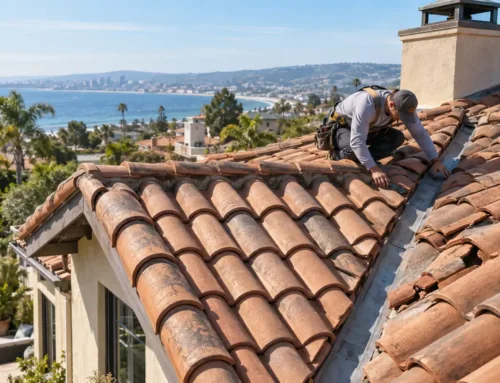
Concrete and clay tile roofs usually cost more because the materials are heavier, installation takes more time, and the underlayment and flashing details are especially important. Tile is a strong choice for many San Diego homes, but the roof structure must be able to support the weight. If you are switching from shingles to tile, structural evaluation may be needed.
Flat and low-slope roofs are priced differently from steep-slope roofs. Materials such as TPO, PVC, modified bitumen, or coating systems may be used depending on drainage, roof condition, building type, and sun exposure. These roofs require careful installation because water does not run off as quickly as it does on a pitched roof.
Why the Cheapest Estimate Is Not Always the Best Value
A low roofing estimate can look attractive, but it may not include everything the roof needs. Some bids leave out decking repairs, better underlayment, proper flashing, ventilation improvements, permit-related requirements, disposal, or warranty details.
A good roofing estimate should clearly explain the material being installed, what happens if damaged wood is found, how flashing will be handled, whether ventilation needs improvement, and what warranty applies. The goal is not just to get a new roof for the lowest number. The goal is to install a roof system that protects the home for years.
Poor installation can turn a cheap project into an expensive one if leaks appear after the first rainy season.

Repair vs. Roof Replacement
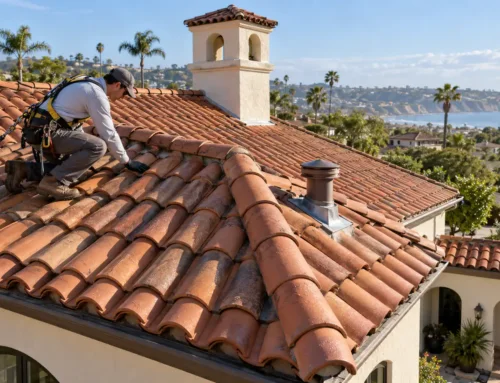
Not every roofing problem requires a full replacement. If the damage is limited to a small area, a targeted roof repair may be enough. This can include replacing damaged shingles, fixing flashing, replacing broken tiles, repairing a leak near a vent, or correcting a small section of underlayment.
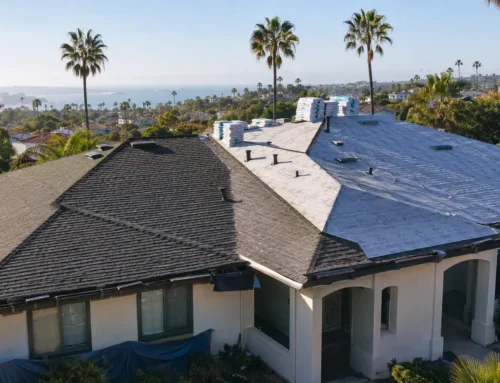
Replacement becomes more likely when damage is widespread, the roof is near the end of its service life, leaks keep returning, shingles are brittle, tile underlayment is failing, or the roof has multiple problem areas. A roof inspection helps determine whether repair, maintenance, lift-and-relay, or full replacement makes the most financial sense.
San Diego Permits and Code Considerations
Some roofing projects in San Diego may require permits, especially when structural framing, roof sheathing, heavier materials, historic review, solar removal and reinstallation, or code-related changes are involved. Permit requirements can affect cost and timeline, so they should be discussed before work begins.
San Diego homes may also need Class A roof assemblies, fire-conscious materials, proper ventilation, and energy-code considerations depending on the roof type and project scope. A local roofing contractor can help explain which requirements apply to your home.
Get a Roofing Estimate in San Diego
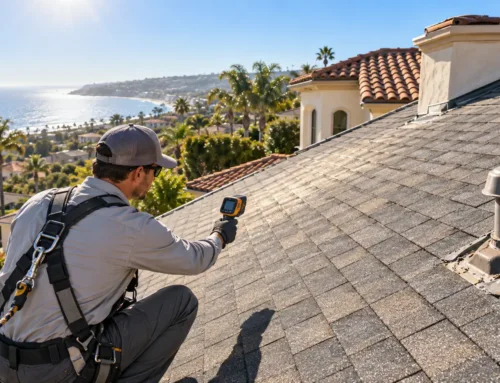
The best way to understand your roofing cost is to schedule a professional inspection and estimate. A roofer can measure the roof, check the existing material, inspect flashing and underlayment, evaluate decking, look for ventilation issues, and explain whether repair or replacement is the better option.
San Diego County Roofing & Solar provides roof inspections, roof repairs, roof replacements, tile roofing, asphalt shingle roofing, flat roofing, commercial roofing, and solar-ready roofing services throughout San Diego County.
Call 855-732-6868 or request a roofing estimate today. Our team can help you understand your options, compare materials, and choose the right solution for your home or building.
Frequently Asked Questions About Roofing Cost in San Diego
How much does a new roof cost in San Diego?
Many full roof replacements in San Diego fall between about $9,000 and $40,000 or more. Smaller asphalt shingle roofs may cost less, while tile, metal, steep, large, or complex roofs can cost more.
What is the cheapest roofing material?
Asphalt shingles are usually the most affordable roofing material for many San Diego homes. They cost less than tile or metal and are available in many styles.
Why do tile roofs cost more?
Tile roofs cost more because the material is heavier, installation is more labor-intensive, and the underlayment and flashing details require careful work. The roof structure may also need to support the added weight.
Is roof repair cheaper than replacement?
Yes, roof repair is usually cheaper than replacement when the damage is isolated. If the roof has widespread damage, repeated leaks, or aging materials, replacement may be the better long-term value.
Do permits affect roofing cost in San Diego?
They can. Permit needs depend on the project scope, roof structure, material changes, sheathing work, historic status, solar work, and code requirements. A local contractor can explain what applies to your property.
Does solar affect roof replacement cost?
Yes. If solar panels need to be removed and reinstalled, that can add coordination, labor, and time. It is smart to inspect or replace an aging roof before installing solar panels.
How do I get an accurate roofing estimate?
The most accurate estimate comes from an on-site roof inspection. The contractor should evaluate roof size, slope, access, materials, underlayment, flashing, decking, ventilation, and any hidden damage.