
A damaged roof in San Diego rarely improves on its own. Small failures around flashing, tiles, shingles, vents, valleys, or roof penetrations can allow water to move beneath the visible roofing and reach underlayment, sheathing, insulation, and interior finishes. At San Diego County Roofing & Solar, we approach roof repair as a diagnostic process: identify the true entry point, determine how far moisture has traveled, repair the failed assembly, and verify that surrounding roofing can continue to perform.
When Does a San Diego Roof Need Repair?
San Diego’s long dry periods can hide defects for months, while the first significant rain can expose damage already affecting concealed materials. Strong UV exposure, coastal air, wind, debris, foot traffic, and aging sealants all contribute to localized failures.
Common warning signs include:
- Water stains on ceilings or walls
- Damp insulation or musty attic odors
- Cracked, slipped, or broken roof tiles
- Missing, lifted, or creased asphalt shingles
- Granules collecting in gutters
- Rusted or separated flashing
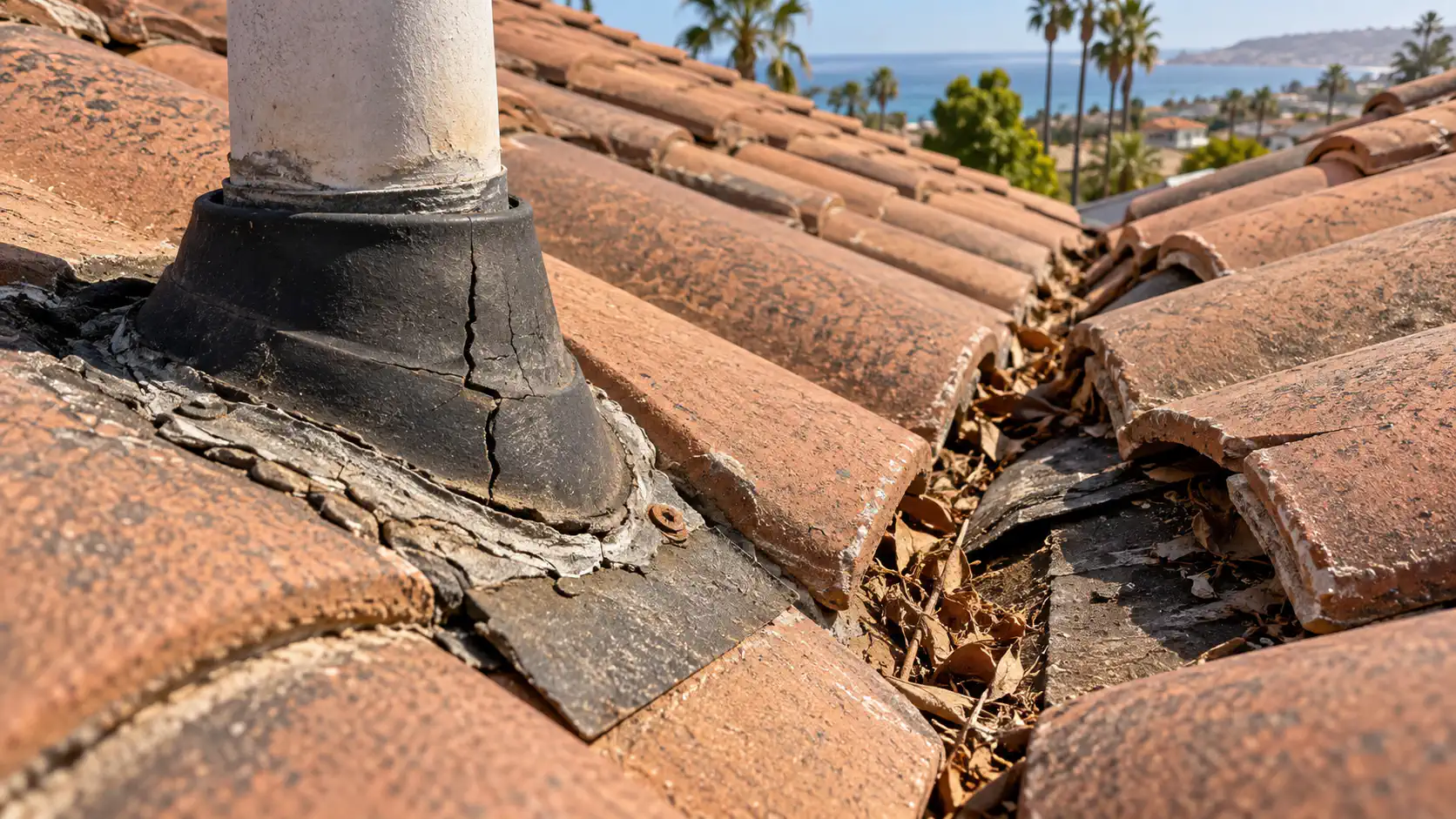
- Cracked pipe boots or deteriorated sealant
- Soft or discolored roof decking
- Recurring leaks near skylights, chimneys, valleys, or walls
A stain does not necessarily identify the leak directly above it. Water may enter at one location, travel along underlayment or framing, and appear several feet away.
Roof Leak Signs That Should Not Be Ignored
Ceiling Stains and Interior Drips
Brown rings, bubbling paint, damp drywall, or active dripping indicate that water has moved beyond the exterior roofing. The repair should address the entry point and any wet materials below it. Repainting a ceiling without correcting the roof defect only hides the evidence.
Cracked or Displaced Roof Tiles
A broken tile does not automatically mean the roof is leaking because tile roofing includes underlayment beneath the surface. However, cracked or displaced tiles expose that underlayment to more UV, debris, and direct water flow. Older underlayment can become brittle, especially around fasteners, valleys, and penetrations.
Missing or Wind-Damaged Shingles
Shingles that lift, tear, crease, or disappear expose the layers below and break the roof’s intended water-shedding pattern. A lasting repair should restore proper fastening and confirm that surrounding shingles remain serviceable.
Flashing and Penetration Failures
Persistent leaks often occur where the roof changes direction or meets another component. Chimneys, vents, skylights, walls, valleys, and plumbing penetrations require properly integrated flashing. Surface caulk alone is rarely a durable substitute for correctly installed flashing.
What Usually Causes Roof Leaks in San Diego?
San Diego roofs experience intense sunlight followed by seasonal rain. That cycle can age sealants and roofing materials, loosen older repairs, and reveal defects during storms. Frequent causes include aged tile underlayment, failed flashing, cracked tiles, wind-damaged shingles, deteriorated pipe boots, blocked drainage, ponding, previous patchwork, and rooftop foot-traffic damage.
The leak source should be diagnosed before materials are removed. Otherwise, the most visible damaged component may be replaced while the actual water-entry point remains.
How Much Does Roof Repair Cost in San Diego?
Roof repair prices vary because the term can describe anything from a few damaged components to reconstruction of a larger roof section. As a practical budgeting range, many localized residential repairs may cost roughly $500 to $2,500. More complex work involving widespread underlayment failure, wood damage, difficult access, specialty tile, major flashing work, or several leak locations can exceed $3,000 to $5,000.
These are planning figures, not fixed quotes. A useful estimate should identify the affected area, material, access, flashing work, deck repairs, and how much surrounding roofing must be opened to complete the repair correctly.
What Increases Roof Repair Cost?
Major cost factors include roof pitch and height, material availability, damaged area size, underlayment and deck condition, custom flashing, solar panels or rooftop equipment, emergency dry-in work, and historic-resource or permit requirements. A low price can be misleading when it covers only surface patching instead of the failed assembly beneath it.
Tile Roof Repair in San Diego
Tile roofs are common throughout San Diego County, but the tile is only one part of the system. Clay and concrete tiles shed most rainwater while underlayment provides critical secondary protection.
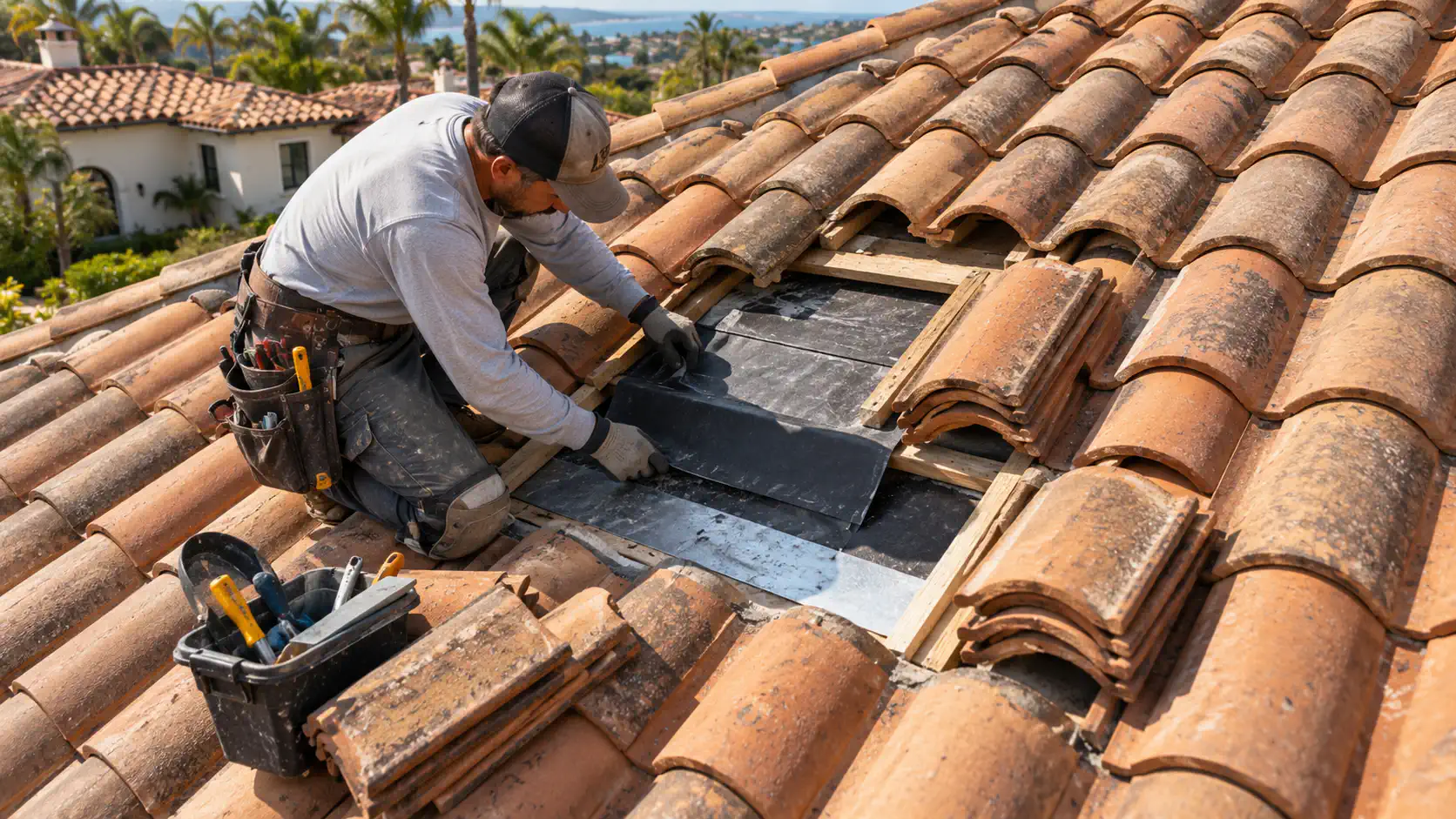
A proper tile repair may require lifting surrounding tiles, replacing broken pieces, inspecting fasteners or battens, repairing underlayment, replacing damaged flashing, and reinstalling the tile field without creating new breakage. When matching tiles are discontinued, compatible replacement strategies may be needed to preserve appearance.
Repeated leaks across different roof areas can indicate broader underlayment deterioration rather than isolated tile damage. At that point, continued spot repairs may become less economical.
Asphalt Shingle Roof Repair
Asphalt shingle repairs commonly address missing shingles, wind damage, exposed fasteners, failed flashing, localized deck deterioration, or problems near vents and edges.
Replacement shingles should be integrated into existing courses rather than layered over damaged material. Surrounding shingles must remain flexible enough to lift and reseal without cracking; brittle older shingles can enlarge the repair area. Color matching may be imperfect because existing shingles fade or the original product may be discontinued.
Roof Repair or Roof Replacement?
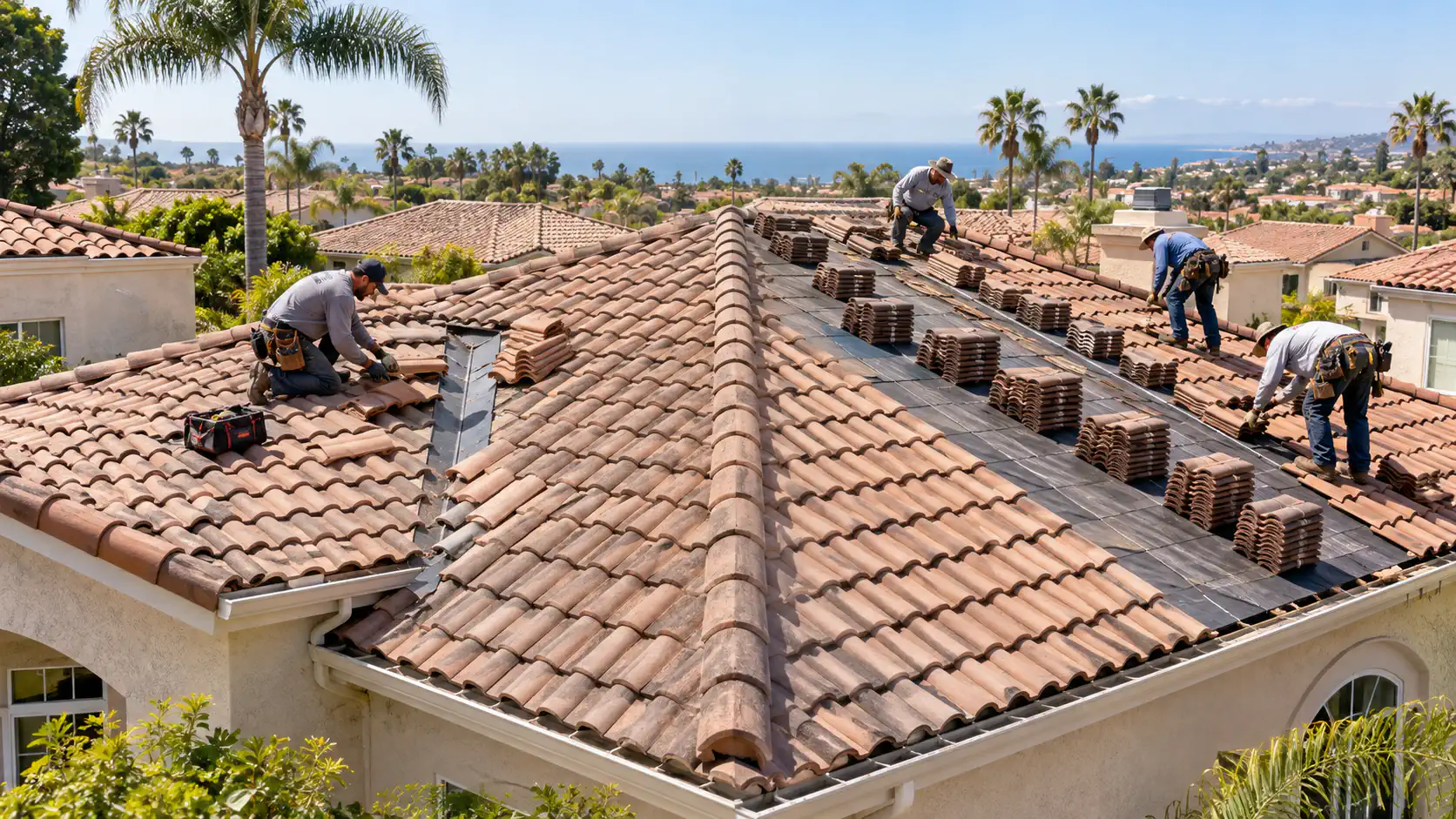
Repair is generally more practical when damage is localized, surrounding roofing remains serviceable, compatible materials are available, and the failed area can be restored without disturbing a large portion of the roof.
Replacement becomes more likely when leaks are widespread, underlayment has failed across multiple areas, the deck has extensive deterioration, or previous repairs have become repetitive. Age alone should not decide the issue; the condition of the full roofing system matters more.
Do Roof Repairs Require a Permit in San Diego?
Many straightforward roof-covering renewals do not require a building permit when the roof structure and diaphragm are not altered. However, permits can be required for structural changes, replacement of structural framing, certain deck work, heavier material changes, and work on designated historical resources or properties in adopted historic districts.
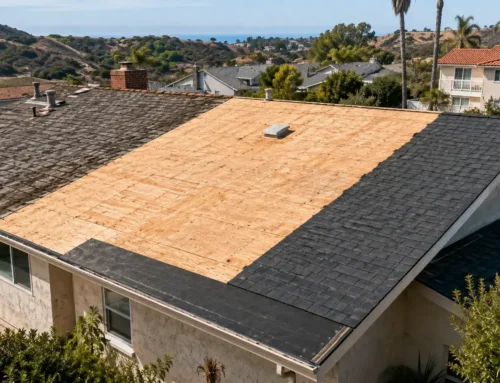
The City of San Diego’s Minimum Standards for Renewal of Roof Covering official roofing permit guidance states that damaged sheathing on single-family homes, duplexes, and townhouses may be replaced in kind without a permit when the cumulative replacement does not exceed 25% of the entire roof surface, subject to the bulletin’s conditions. It also establishes Class A roof-covering requirements for applicable replacement, alteration, and repair work.
Property owners should confirm the final scope before work begins because hidden damage discovered after tear-off can change permit requirements.
What a Professional Roof Repair Inspection Should Include
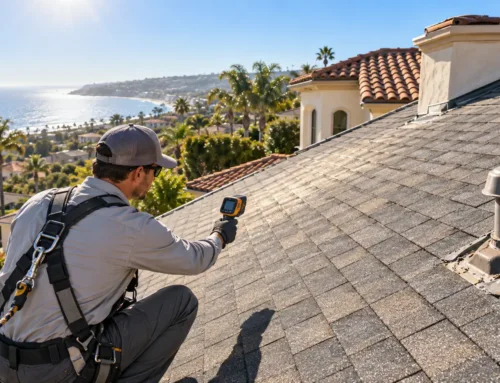
A useful inspection should trace the likely water path and explain why the assembly failed. We evaluate the visible roof surface, flashing, penetrations, roof-to-wall transitions, valleys, drainage points, sealants, underlayment where accessible, deck condition, attic evidence, and prior repair areas. Photos help document conditions, and inspection soon after rain can make intermittent moisture patterns easier to trace.
An inspection should also determine whether the visible defect is isolated or part of a larger pattern. Several cracked tiles, repeated flashing failures, widespread shingle deterioration, or evidence of moisture in separate areas may indicate that a narrowly focused patch will not provide an economical long-term solution.
Temporary Patches vs Permanent Roof Repairs
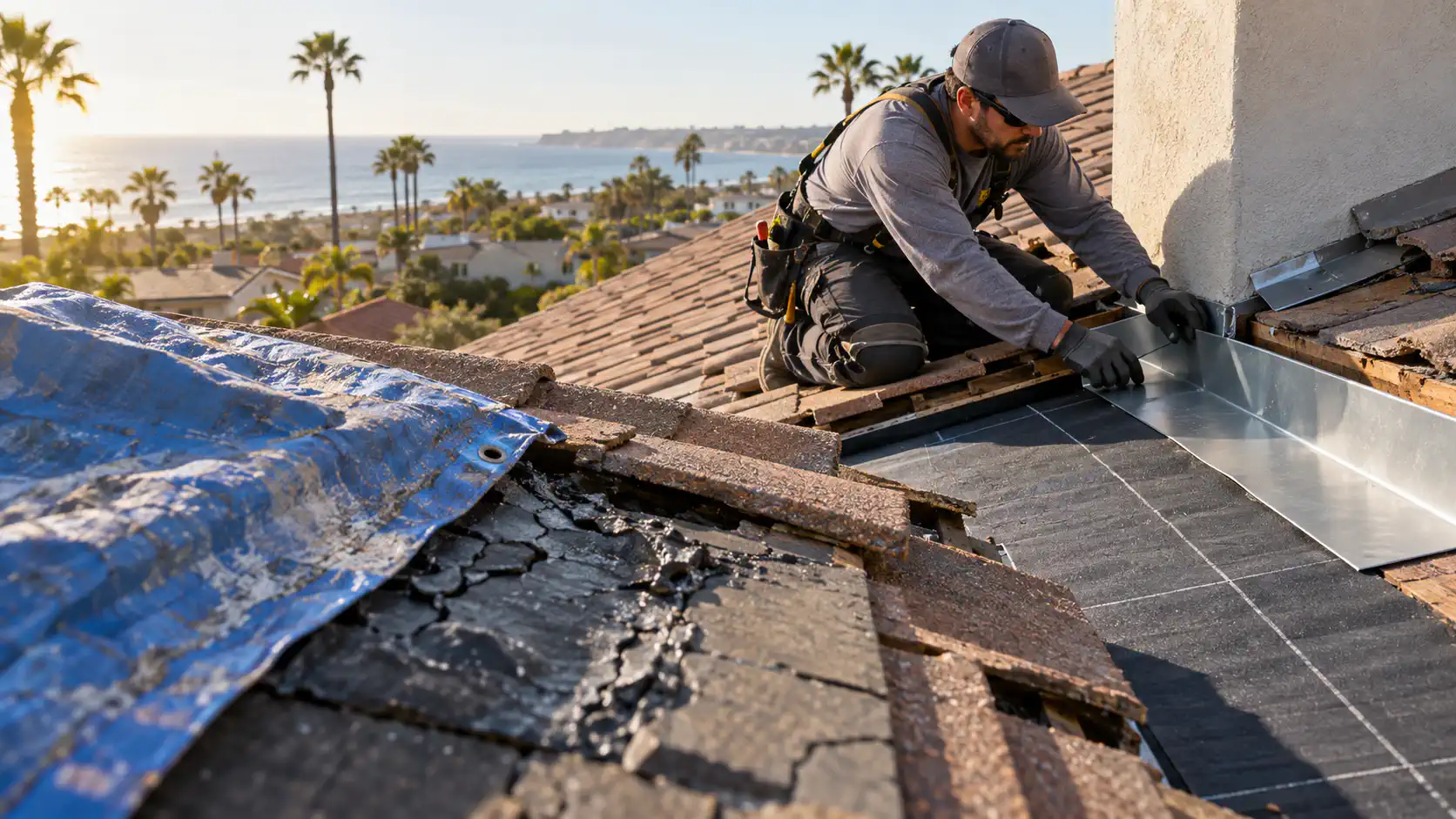
Emergency tarping, temporary sealant, or localized mastic can reduce immediate water entry when permanent work cannot be completed at once. These measures should remain temporary.
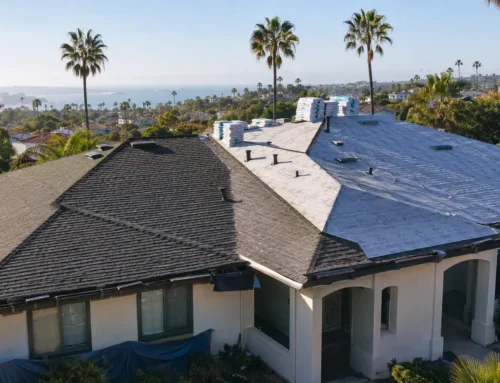
A permanent repair restores the roof in layers. That may require removing surrounding material, repairing underlayment or membrane, replacing damaged wood, installing proper flashing, restoring fastening patterns, and reinstalling the finish material. Repeated caulking over the same leak area is a strong sign that the underlying failure has not been corrected.
How to Choose a Roof Repair Contractor in San Diego
A contractor should explain the suspected cause, repair boundary, materials to be removed and replaced, and what happens if concealed damage is discovered. Before signing, homeowners can verify license status through the California Contractors State License Board contractor license lookup, whose lookup provides current public license information. The written scope should also distinguish between a temporary patch, component replacement, and reconstruction of the affected roof assembly.
A detailed proposal is particularly important for tile roof repairs because the visible broken tile may represent only a small portion of the work. Access to the underlayment, flashing, deck, or valley can require temporary removal and careful reinstallation of a larger surrounding area.
When to Schedule Roof Repair
The best time to repair a roof is before another storm expands the damaged area. San Diego’s dry weather creates useful repair windows, but it can also make a leak seem inactive once rain stops.
Visible staining, exposed underlayment, damaged roofing, or failed flashing should be investigated promptly. Moisture that repeatedly enters the same area can deteriorate wood sheathing, damage insulation, stain interior finishes, and increase the eventual repair scope.
For a detailed assessment and repair plan, our San Diego roof repair service roof repair service page focuses on locating the source of the failure and restoring the affected roofing system rather than covering the symptom.
Conclusion
San Diego roof repair is most successful when the diagnosis is precise and the repair addresses every affected layer. Tile, shingles, flashing, underlayment, decking, penetrations, and drainage work together, so a visible defect should not be evaluated in isolation. We recommend acting when reliable signs of damage appear, documenting the condition, confirming permit requirements, and choosing a scope that restores the roof instead of repeatedly patching the same failure. San Diego County Roofing & Solar provides roof repair in San Diego, CA, with a focus on accurate leak detection, practical repair planning, and durable workmanship.
FAQ
How do I know whether my San Diego roof needs repair or full replacement?
A repair is usually appropriate when damage is limited to a defined area and the surrounding roof remains serviceable. Replacement becomes more practical when leaks occur in multiple locations, underlayment or decking is broadly deteriorated, or the roof is requiring repeated repairs.
How quickly should I repair a roof leak in San Diego?
A confirmed leak should be addressed as soon as practical, even if rain has stopped. Moisture can remain in insulation, decking, and wall or ceiling assemblies, and the next storm may expand the damaged area.
Can a broken tile be replaced without repairing the underlayment?
Sometimes, but only if the underlayment and surrounding components remain intact. Because tile is primarily a water-shedding surface, the area beneath a broken tile should be inspected before assuming that replacing the visible tile alone is sufficient.