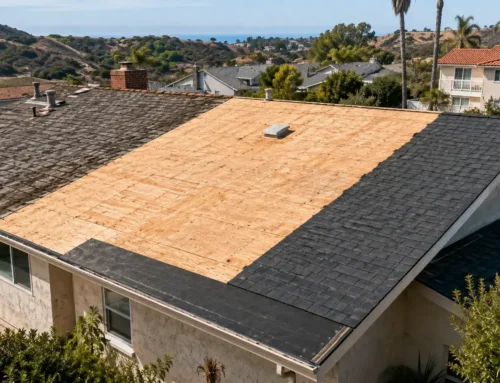

When an aging tile roof begins to leak, the visible tiles are not always the true problem. In many San Diego homes, the clay or concrete tile can remain serviceable long after the underlayment, flashing, sealants, and other concealed waterproofing components have deteriorated. At San Diego County Roofing & Solar, we evaluate the entire roof assembly before recommending either a tile roof lift and relay or a complete new tile installation. The right choice depends on the condition of the existing tile, the age and design of the roof, the extent of hidden damage, the desired warranty, and how long the homeowner plans to keep the property.
What Is a Tile Roof Lift and Relay?
A tile roof lift and relay is a reroofing method that preserves most of the existing roof tile while replacing the water-shedding system beneath it. The tiles are carefully removed, sorted, and staged on or near the roof. The old underlayment is then torn off so the roof deck can be inspected. Damaged wood is replaced as needed, new underlayment and flashing are installed, and the reusable tiles are reset.
This process is significantly more extensive than a spot repair. A repair may replace several broken tiles or seal a localized flashing defect, while a lift and relay exposes the full roof deck and renews the concealed components across the designated roof area. It is often appropriate when the existing tile remains structurally sound but the underlayment has reached the end of its useful service life.
A properly scoped lift and relay may include new valley metal, pipe flashings, edge metal, wall flashing, battens, hip and ridge components, replacement tiles, ventilation corrections, and sheathing repairs. The assembly must match the roof slope, tile profile, fastening method, manufacturer instructions, and applicable code.
Why Tile Can Outlast the Underlayment Beneath It
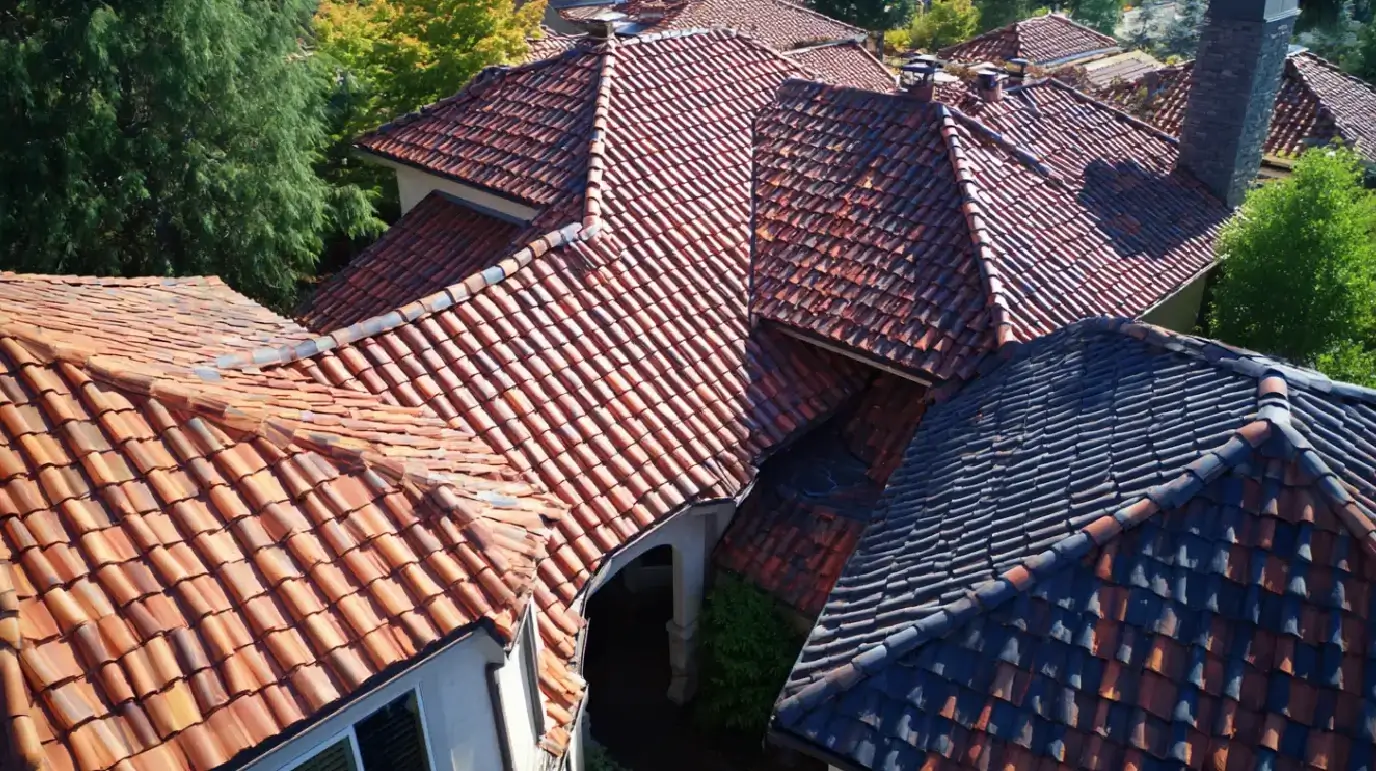
Clay and concrete tiles are durable exterior coverings, but they are not the roof’s only water barrier. Tile sheds most rain and protects the materials below, while underlayment provides secondary protection over the deck and flashing redirects water at vulnerable intersections. Wind-driven rain and incidental moisture can still reach the concealed assembly, particularly at valleys, walls, penetrations, transitions, and damaged areas.
This difference in service life explains why an older tile roof may not need all-new tile. The visible covering may remain reusable while felt underlayment, metal, fasteners, mortar, and sealants require replacement. Tile condition still varies by product, exposure, installation, foot traffic, impact damage, coastal conditions, and previous repairs, so reuse must be confirmed by inspection.
How a Tile Roof Manages Water
A tile roof works as a layered drainage system. The tile slows and redirects water toward the eaves. The underlayment protects the deck from incidental moisture. Flashing collects and diverts water at penetrations and changes in roof geometry. Valleys carry concentrated runoff, while gutters and downspouts move water away from the structure.
Each layer must overlap in the direction of drainage so water can move from the ridge to the discharge point without reverse laps, blocked valleys, or poorly integrated flashing. The California Residential Code roof assembly provisions address roof coverings, slopes, underlayment, flashing, and installation, while product approvals and manufacturer instructions may add system-specific requirements.
Replacing underlayment without correcting defective flashing or drainage can therefore leave the roof vulnerable. The assembly must function as one connected system.
Signs a San Diego Tile Roof May Need a Lift and Relay
Recurring leaks often indicate that isolated repairs are no longer addressing the underlying condition. Stains may appear near valleys, chimneys, skylights, walls, or plumbing vents, but water can travel along underlayment, rafters, and decking before becoming visible.
Other warning signs include brittle underlayment at eaves, cracked hip or ridge mortar, corroded valley metal, repeated tile breakage, loose tiles, deteriorated flashing, extensive patchwork, and soft or stained decking. San Diego sun can embrittle exposed materials, coastal air can accelerate metal corrosion, and debris-filled valleys may reveal drainage defects during heavy rain.
Tile Roof Repair vs. Lift and Relay vs. Complete Replacement
Localized repair is appropriate when damage is limited and the surrounding assembly remains serviceable, such as a few broken tiles or one failed pipe flashing. It becomes less economical when leaks recur in different areas or brittle underlayment tears during access.
Lift and relay is favored when the tile is reusable but the concealed waterproofing system is failing. It renews underlayment and flashing while preserving the existing field tile, including discontinued colors or profiles.
Complete replacement is stronger when tile is deteriorated, incompatible, heavily patched, difficult to match, or likely to break during removal. It also suits homeowners seeking a new color, uniform appearance, manufacturer material warranty, or full system renewal.
| Decision Factor | Lift and Relay | New Tile Installation |
| Existing tile condition | Most tiles must be reusable | Existing tile may be damaged or obsolete |
| Material cost | Lower because field tile is reused | Higher because all field tile is new |
| Appearance | May retain fading and minor variation | Uniform color, profile, and finish |
| Tile warranty | Usually limited or unavailable on reused tile | Manufacturer warranty may apply |
| Breakage allowance | Replacement tiles must be sourced and blended | Breakage is less relevant because tile is new |
| Best fit | Sound tile over failed underlayment | Worn tile, redesign, or maximum system renewal |
The Tile Roof Lift and Relay Process
Tile Roof Inspection and Scope Development
Inspection should cover the roof surface, accessible attic, flashings, penetrations, valleys, hips, ridges, eaves, drainage paths, and visible deck conditions. The contractor should determine whether tile can survive removal, whether matching replacements are available, and whether any details require redesign.
The proposal should identify removals, underlayment, flashing, replacement tile, wood-repair pricing, and warranties. Vague language such as “replace paper and reset tile” is not enough for an accurate bid comparison.
Site Protection and Tile Staging
Because tile is heavy and brittle, crews must protect the property, handle reusable pieces carefully, and avoid concentrated roof loading. Tile is sorted by condition and location; visible roof planes may be kept together for color consistency, while unsuitable pieces are removed. Replacement tile should be blended when an exact match is unavailable.
Removal of Existing Roof Tiles and Components
Tiles are lifted in sequence, and fasteners, battens, mortar, damaged flashing, and old underlayment are removed as required. The objective is to expose the deck without unnecessary damage. The Tile Roofing Industry Alliance installation guidance emphasizes material handling, underlayment protection, flashing integration, and installation sequencing—principles that show why tile reroofing requires trained crews.
Underlayment Tear-Off and Roof Deck Repair
The exposed deck is checked for rot, delamination, staining, open joints, and damage around penetrations or eaves. Because concealed wood damage cannot be measured reliably from the ground, the contract should explain how extra repairs will be documented and priced.
New underlayment must have correct laps, fastening, edge treatment, and integration with valleys and flashing. Synthetic, self-adhered, and asphalt-based products differ, and the right choice depends on the tile, slope, exposure, code, manufacturer instructions, and project goals. Installation quality matters as much as product selection.
Tile Roof Flashing and Drainage Corrections
Pipe flashings, valley metal, edge metal, wall flashing, and transitions should be evaluated rather than automatically reused. Valleys must carry concentrated runoff, wall intersections require layered flashing, and penetrations must be integrated with the underlayment instead of relying on surface sealant. Drainage restrictions and debris traps should be corrected before the tile is reset.
Resetting and Securing the Tile
After waterproofing is complete, tile is reset in aligned courses using an approved attachment method, which may involve nails, screws, wire, clips, foam, battens, or a combination. Hips and ridges receive compatible weather-blocking and attachment materials. Tiles are inspected again during installation, and final cleanup should include valleys, gutters, and surrounding grounds.

Tile Reuse: Benefits and Limitations
Reuse reduces new-material demand and preserves architectural character, especially when a profile is discontinued. However, reused tile retains fading, surface wear, chips, and age variation. Some breakage is normal, particularly with brittle, lightweight, previously repaired, or heavily walked products, so the contract should define a replacement allowance and sourcing plan.
A workmanship warranty may cover new underlayment and flashing while excluding failure of aged tile. New tile may include a manufacturer warranty, but actual coverage depends on the product, installation, registration, exclusions, transfer terms, and maintenance requirements.
Homeowners should request written clarification about who is responsible if a reused tile later cracks, slips, or allows water intrusion. They should also determine whether replacement tiles will be new, salvaged, or taken from a less visible section of the roof. These details can affect both appearance and future repairability.
Lift and Relay Cost vs. New Tile Roof Cost in San Diego
Price should be evaluated by roof area, not house floor area. Pitch, overhangs, garages, porches, hips, valleys, and waste can make the roof substantially larger than the home’s interior footprint. One roofing “square” equals 100 square feet of roof surface.
For preliminary San Diego planning, lift and relay may fall around $8 to $15 per square foot, while complete concrete or clay tile installation may range from about $12 to $25 or more. These are broad estimates rather than fixed market prices. Steep slopes, difficult access, wood damage, premium clay, custom flashing, structural work, solar removal, and complex geometry can increase cost.
Compare bids line by line. A low proposal may exclude permits, disposal, replacement tile, ventilation, valleys, wall flashing, gutters, or deck repair. One contractor may include a set amount of replacement sheathing, while another may charge for every sheet after tear-off. One bid may include new flashing throughout, while another may reuse existing metal wherever possible.
The price difference between lift and relay and complete replacement may also be smaller than expected when the existing tile has a high anticipated breakage rate. If a large percentage of the tile must be replaced, the labor required to sort, match, and blend old material can reduce the financial advantage of reuse.
When a New Tile Roof Is Worth the Additional Investment
New tile is often worth the additional cost when existing material has widespread cracking, severe surface deterioration, inconsistent repairs, or limited replacement availability. It may also suit a long-term owner, major exterior renovation, or solar project that should not outlast the roof beneath it.
New tile improves visual consistency and may provide stronger manufacturer warranty options. Its value still depends on the concealed assembly; premium tile over weak flashing, poor underlayment, or an inadequately prepared deck is not a premium roof.
A new installation can also create an opportunity to change the roof profile, improve color consistency, update ventilation, correct drainage details, or coordinate the roof with new exterior paint and solar equipment. Structural capacity must be reviewed when changing from a lighter covering to a heavier tile product.
How to Choose Between Lift and Relay and New Tile
Begin with tile condition. If most pieces are sound, compatible replacements are available, and normal color variation is acceptable, lift and relay may provide excellent value. If tile is fragile, obsolete, heavily damaged, or visually unacceptable, replacement is more defensible.
Also consider ownership plans, warranty expectations, solar, roof complexity, and tolerance for future maintenance. Compare underlayment specifications, flashing details, attachment methods, tile allowances, wood-repair pricing, permits, cleanup, warranties, and exclusions. The recommendation should follow observed conditions, not a preference for the more expensive system.
Ask each contractor to explain the expected percentage of reusable tile, the proposed underlayment product, the flashing details, how valleys will be rebuilt, and whether hip and ridge components will be mortared or mechanically secured. The scope should also identify how solar mounts, skylights, chimneys, patio-roof transitions, and wall intersections will be handled.

Schedule a Professional Tile Roof Inspection
The most reliable way to resolve the choice is to inspect the materials above and below the tile. San Diego County Roofing & Solar provides tile roof evaluations in San Diego, CA, based on tile condition, underlayment age, flashing, drainage, roof geometry, and ownership goals. The inspection can determine whether repair remains practical, tile is reusable, and which reroofing scope offers the strongest value.
Conclusion
A tile roof lift and relay is not a temporary patch; when properly designed and installed, it is a comprehensive renewal of the waterproofing system beneath reusable tile. A new tile installation goes further by replacing both the concealed roof assembly and the visible covering. Lift and relay is usually the better value when the existing tile remains durable and attractive. Complete replacement is usually the better investment when tile condition, appearance, availability, warranty goals, or long-term plans justify starting with an entirely new system. The correct answer comes from a documented inspection, a complete scope of work, and a realistic comparison of lifecycle value rather than price alone.
Frequently Asked Questions
How long does a tile roof lift and relay last?
The service life depends on the underlayment system, flashing design, installation quality, roof exposure, drainage, maintenance, and condition of the reused tile. A high-quality lift and relay can provide decades of service, but no contractor should promise a universal lifespan without identifying the products and roof conditions involved.
Can all existing roof tiles be reused during a lift and relay?
No. Tiles that are cracked, severely chipped, spalled, distorted, or otherwise unsuitable should be replaced. Even serviceable tile can break during removal and resetting, so the project should include a replacement allowance and a plan for blending compatible tile into the existing roof.
Is a lift and relay better than installing a new tile roof?
Neither option is automatically better. Lift and relay is usually more cost-effective when most existing tile is sound and the failure is concentrated in the underlayment or flashing. New tile installation is generally better when the existing tile is deteriorated, difficult to match, visually undesirable, or unable to support the homeowner’s warranty and long-term performance goals.