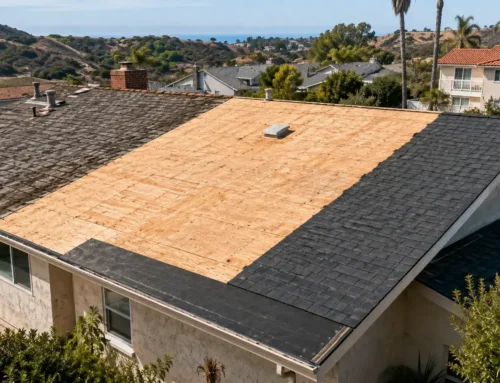

Trees add shade, privacy, and character to San Diego properties, but branches growing too close to a roof can create maintenance problems that are easy to overlook until damage appears. At San Diego County Roofing & Solar, we regularly see how leaves, seed pods, branches, and organic debris affect roofing systems throughout San Diego, CA. Overhanging trees can clog gutters, trap moisture against roofing materials, damage tile, interfere with flashing, and conceal areas where deterioration has already started.
The solution is not necessarily removing every tree near a house. Proper clearance, routine debris removal, careful trimming, and periodic roof inspections can allow mature landscaping and a roofing system to coexist without creating unnecessary risk.
How Trees Near a Roof Can Cause Problems
A tree does not need to fall onto a house to damage a roof. Most tree-related roofing problems develop gradually.
Branches may repeatedly move across roofing materials during windy conditions. Leaves collect behind chimneys and roof penetrations. Small twigs enter valleys and gutters. Fruit, cones, seeds, and palm debris can strike or accumulate on roofing surfaces. Shade can also keep certain roof areas damp longer after rain or morning moisture.
These conditions matter because a roof depends on unobstructed drainage and properly functioning components. Water should move from the roof surface through valleys and toward gutters or drainage points without being trapped by vegetation.
When debris changes that drainage pattern, relatively minor maintenance issues can eventually become leaks, deteriorated underlayment, damaged flashing, or decayed roof decking.
Tree Debris on San Diego Roofs
San Diego does not experience the heavy autumn leaf fall associated with some colder regions, but local roofs can still collect substantial organic debris throughout the year.
Properties may be surrounded by eucalyptus, palms, pine trees, ornamental trees, jacarandas, ficus, pepper trees, or other vegetation that drops leaves, bark, needles, flowers, seeds, or branches at different times of the year.
Wind can push this debris into predictable collection points, including:
- Roof valleys
- Behind chimneys
- Around skylights
- Along parapet walls
- Beneath overhanging branches
- Around plumbing and exhaust penetrations
- Inside gutters
- At downspout openings
Debris accumulation is particularly important on roofs with complex layouts. A small pile of leaves in a valley may partially obstruct runoff and cause water to move sideways rather than directly toward the drainage point.
Organic debris also absorbs water. Instead of allowing a roof surface to dry after rainfall, accumulated leaves can hold moisture against roofing materials for an extended period.

Overhanging Branches and Roof Damage
Branches that hang directly over a roof create both immediate and long-term risks.
During calm conditions, a branch may appear harmless. During wind, however, the same branch can move several inches or more. Repeated movement against a roof surface can create abrasion and impact damage.
The consequences depend heavily on the roofing material.
Tree Damage to Tile Roofs
Tile roofs are common throughout San Diego County, and nearby trees deserve particular attention around these systems.
Clay and concrete tiles are durable, but they are not designed to withstand repeated impact from heavy branches. A falling limb can crack a tile immediately, while smaller branches rubbing against the same area may gradually damage the surface.
Broken tiles are especially important because tile is only one component of the complete roofing assembly. Water management also depends on the underlayment, flashing, penetrations, valleys, and drainage details beneath or around the tile.
Once a tile becomes cracked, displaced, or broken, the materials below it may receive greater exposure to water and sunlight.
Branches can also make routine roof maintenance more complicated. Dense vegetation may obscure damaged tiles from ground-level observation, allowing minor problems to remain unnoticed.
Trees, Roof Valleys, and Drainage Problems
Roof valleys are among the most important drainage areas on a sloped roof because they concentrate water from two adjoining roof planes.
They also naturally collect tree debris.
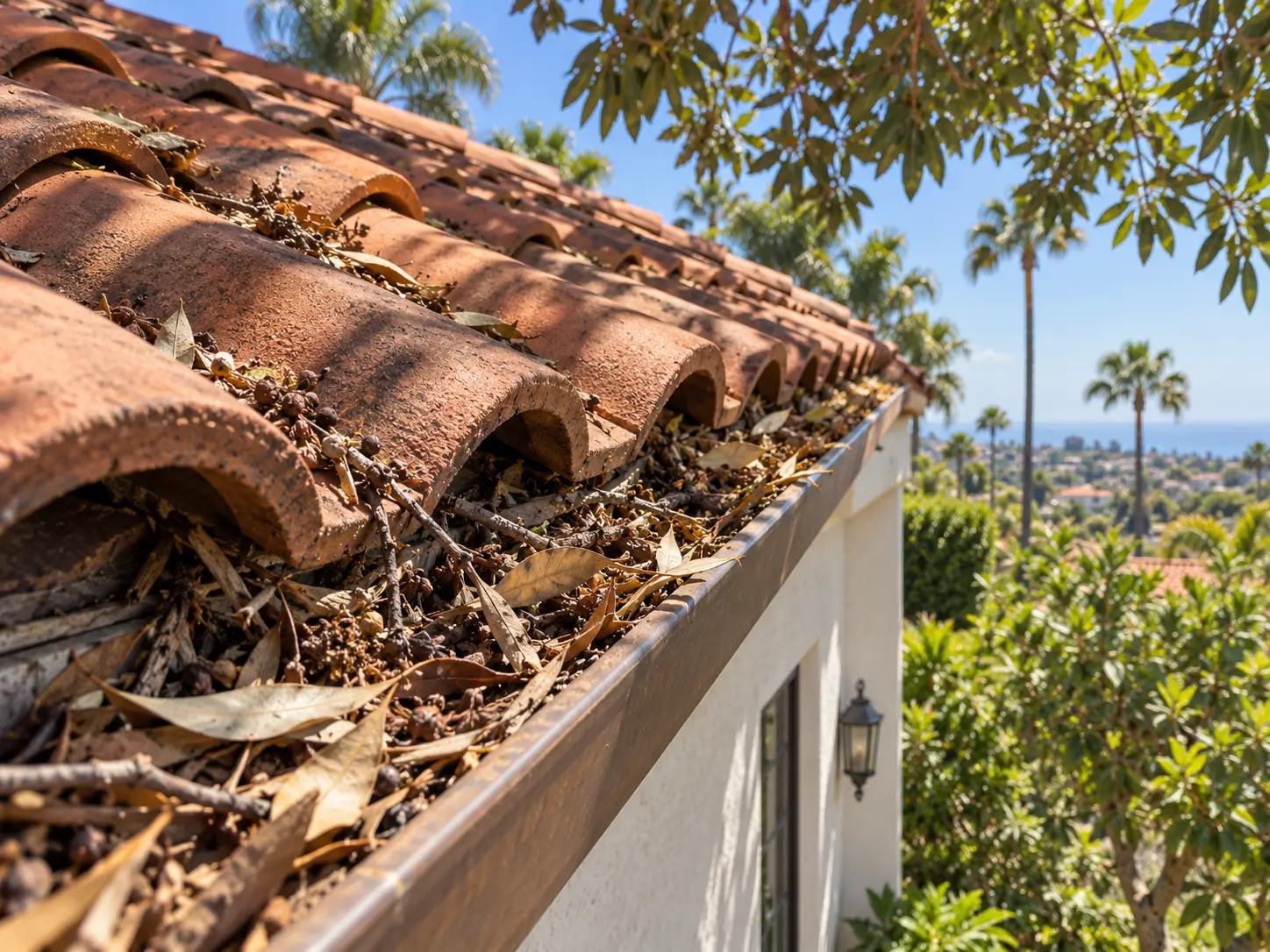
A few leaves may not appear significant, but leaves combined with twigs, bark, seeds, and dirt can create a dense layer inside a valley. During rain, that material can restrict water movement.
Water may then slow down, spread beneath debris, or move toward areas it would not normally reach.
This is particularly concerning when debris accumulates near flashing transitions or aging roofing materials.
Maintaining clean valleys helps preserve the drainage path originally designed into the roof.
Why Clean Gutters Matter When Trees Are Nearby
Trees and gutters require ongoing attention as a system.
Leaves and small branches often travel down the roof slope and collect inside gutters. As this material builds up, the effective capacity of the gutter decreases.
During heavier rain, water may begin overflowing rather than reaching the downspout.
Overflow can affect:
- Fascia boards
- Roof edges
- Exterior walls
- Stucco
- Landscaping
- Foundations and areas near the structure
Downspouts can also become obstructed by compacted leaves and debris.
The City of San Diego specifically recommends inspecting and removing debris from gutters before storm season and checking drainage systems to ensure runoff can move properly. Property owners can review the City’s storm preparation recommendations for additional guidance.
Homes with trees directly above roof slopes may require more frequent gutter cleaning than properties with little surrounding vegetation. Maintenance frequency should be based on actual debris accumulation rather than a fixed calendar.
Tree Debris Around Roof Flashing
Flashing protects some of the most vulnerable transitions on a roofing system.
It may be installed around chimneys, walls, valleys, skylights, vents, and other roof penetrations. These areas require water to move efficiently over or around precisely installed components.
Tree debris can interfere with that process.
Leaves packed behind a chimney, for example, can create a small moisture reservoir against flashing. Debris trapped along a wall-to-roof transition can prevent the area from drying normally.
The problem may remain hidden because the flashing itself is partially covered.
For this reason, removing debris around penetrations and transitions is more important than simply clearing the most visible portions of the roof.
Trees Can Hide Existing Roof Problems
Heavy tree coverage also reduces visibility.
A homeowner looking at the roof from the yard may not be able to see areas beneath branches. Broken tiles, displaced materials, deteriorated flashing, or debris-filled valleys can remain hidden.
This makes roof inspections especially valuable for homes surrounded by mature landscaping.
A professional inspection can examine areas that are difficult or unsafe to evaluate from the ground while identifying whether tree-related conditions have already affected the roofing system.

Roof Inspection After Tree Trimming
Major tree trimming should often be followed by a roof inspection, particularly when branches were directly above the house.
Tree work creates a temporary period of increased roof exposure to falling material. Even experienced tree crews may need to lower or move large limbs near the structure.
Small branches can also fall onto tiles during pruning and cleanup.
After significant trimming, we recommend checking for:
- Cracked or broken tiles
- Shifted roofing materials
- Impact damage
- Debris remaining in valleys
- Debris around flashing
- Damaged ridge or hip tiles
- Disturbed gutters
- Bent gutter sections
- Damaged roof penetrations
The objective is to identify new damage before the next significant rainfall.
A cracked tile found immediately after trimming is typically easier to address than moisture damage discovered months later.
How Far Should Tree Branches Be From a Roof?
Adequate clearance reduces physical contact, limits debris accumulation, improves visibility, and can also support wildfire preparedness.
Current San Diego Fire-Rescue guidance emphasizes maintaining vegetation near structures and keeping trees from contacting the home. The City states that healthy trees should have appropriate separation from structures and provides guidance calling for 10 feet of clearance from roofs and chimneys in its current Zone 0 tree recommendations.
San Diego also contains more than 500 linear miles of wildland-urban interface, making vegetation management particularly relevant for many local neighborhoods. Homeowners can review the City’s official defensible space guidance for trees near structures.
Clearance should still be evaluated according to the specific tree, property, roof design, and local requirements.
Roof and Gutter Debris Can Increase Fire Exposure
Dry leaves, needles, bark, and small branches are not only drainage concerns.
When dry vegetation accumulates on a roof or inside gutters, it creates combustible material immediately adjacent to the structure.
This becomes more significant in communities near canyons, slopes, open vegetation, and other wildfire-prone environments.
Removing accumulated organic material from roofs and gutters therefore serves two purposes: protecting drainage performance and reducing combustible debris around the building.

Avoid Walking on the Roof to Trim Trees
Tree maintenance and roof maintenance should be treated as separate professional tasks.
Homeowners should avoid standing on tile or other roofing materials to reach branches. Walking incorrectly on a tile roof can crack tiles even when no damage is immediately visible.
There is also significant fall risk when working near roof edges, ladders, branches, or sloped surfaces.
Tree professionals should handle pruning and branch removal, while qualified roofing professionals should evaluate the roofing system when damage is suspected.
Signs Trees May Already Be Affecting Your Roof
Several warning signs can indicate that nearby vegetation has become a roofing maintenance issue.
Look for gutters overflowing during rain, visible piles of leaves in valleys, branches touching the roof, broken tiles beneath tree canopies, unusually heavy debris around chimneys, or stains developing near roof edges.
Interior warning signs can include ceiling stains, localized discoloration, musty odors, or evidence of moisture near walls and attic spaces.
These symptoms do not automatically prove that a tree caused the problem, but nearby vegetation should be considered during the inspection.
Create a Roof Maintenance Routine for Homes With Mature Trees
Properties with significant tree coverage benefit from condition-based maintenance rather than waiting for visible leaks.
Roof areas should be checked periodically for debris accumulation, particularly before San Diego’s wetter months and after significant wind events. Gutters and downspouts should remain clear enough to handle runoff without overflowing.
Branches should be monitored as trees grow. Clearance that was adequate several years ago may no longer be sufficient.
The roof should also be evaluated after major pruning, branch failures, or any event in which material strikes the roofing surface.
This combination of landscaping maintenance and roofing inspections can identify relatively minor issues before they affect underlayment, decking, ceilings, or interior finishes.
Conclusion
Trees near a roof can be an asset to a San Diego property when vegetation and roofing maintenance are properly coordinated. Problems usually begin when branches contact roofing materials, organic debris accumulates in valleys and gutters, drainage becomes restricted, or tree work damages tiles and flashing without being noticed. Maintaining appropriate branch clearance, keeping roofs and gutters clean, and scheduling an inspection after significant trimming can substantially reduce these risks. San Diego County Roofing & Solar can inspect tree-related roof concerns and identify damaged tiles, obstructed drainage areas, flashing problems, and other conditions before they develop into larger repairs.
FAQ
Can tree branches damage a tile roof?
Yes. Heavy branches can crack or displace clay and concrete tiles, while repeated rubbing from smaller branches can gradually damage roofing surfaces. Branch impact can also affect ridge tiles, gutters, flashing, and other components.
How often should I clean roof debris if trees hang over my house?
There is no single schedule that works for every property. Homes beneath mature or heavily shedding trees may need debris and gutter checks several times during the year, particularly before rainy periods and after strong winds or seasonal leaf, flower, or seed drop.
Should I have my roof inspected after tree trimming?
A roof inspection is recommended after substantial trimming when branches were positioned over or close to the roof. An inspection can identify cracked tiles, impact damage, displaced materials, gutter damage, remaining debris, and disturbed flashing before rainfall exposes the problem.